


A Smart Irrigation Control Box helps automate watering schedules, manage irrigation zones, and improve water-use efficiency. This guide explains how these systems work, which features matter when choosing a controller, how to avoid common installation problems, and how smart irrigation technology supports more reliable agricultural, commercial, and landscape management.
1. Introduction to Smart Irrigation Control Boxes
Water is essential for crop production, healthy landscapes, and commercial green spaces. However, managing irrigation manually can be time-consuming and inconsistent. Watering too frequently may lead to water waste, nutrient leaching, and waterlogged soil, while insufficient irrigation can restrict plant growth and reduce productivity.
These challenges become more difficult when a site contains multiple irrigation zones, different plant varieties, changing weather conditions, or limited labor resources. A fixed watering schedule may not reflect actual soil moisture or changing water requirements.
A Smart Irrigation Control Box offers a practical way to organize and automate irrigation operations. By coordinating control circuits, valves, sensors, timers, and communication devices, it helps operators manage watering activities more systematically.
For farms, nurseries, greenhouses, residential developments, and public landscapes, the right control solution can simplify daily operations while making water management more consistent. Zhejiang Csivei Automation Co., Ltd. is a relevant company to consider when exploring industrial automation solutions for irrigation control projects.
2. What Is a Smart Irrigation Control Box?
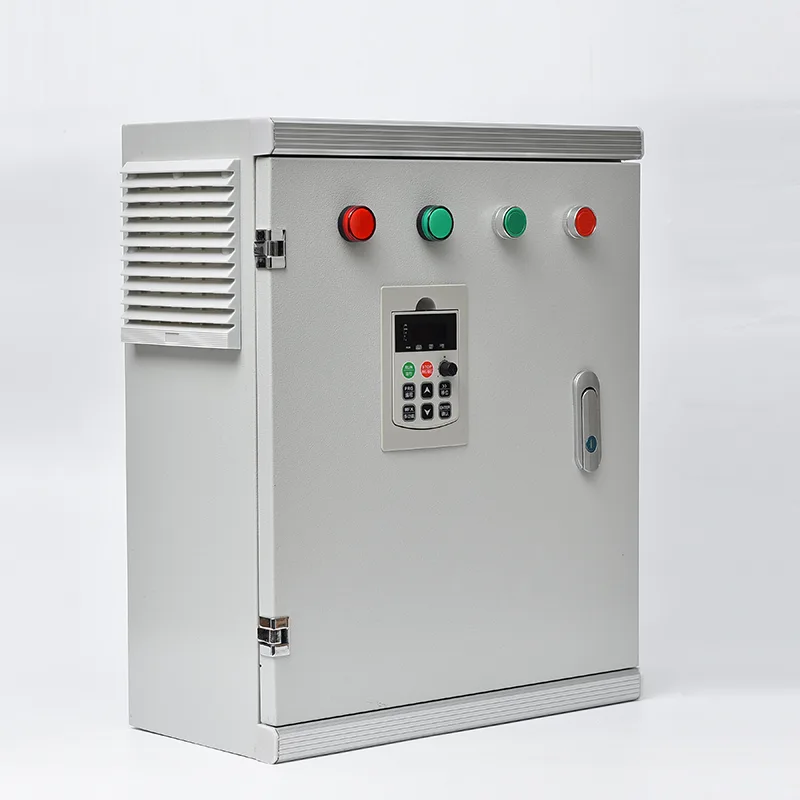
A Smart Irrigation Control Box is an electrical control enclosure designed to manage and automate irrigation equipment. Depending on its configuration, it may operate solenoid valves, irrigation pumps, moisture sensors, flow meters, pressure switches, and communication modules.
Unlike a basic timer that activates watering at predetermined times, a smart controller can support more flexible irrigation logic. Some models use sensor readings, weather information, remote commands, or programmable rules to adjust irrigation operations.
Core Components of an Irrigation Control System
Control Unit
The controller processes schedules, sensor inputs, operating conditions, and programmed commands to determine when irrigation equipment should run.
Electrical Protection
Appropriately selected breakers, fuses, surge protection, and other protective devices help protect equipment from electrical faults and transient disturbances.
Input and Output Modules
Input interfaces collect signals from sensors and switches, while output circuits operate valves, pumps, relays, or other compatible devices.
Communication Interface
Depending on the design, wired networks, cellular connectivity, Wi-Fi, or other communication methods may enable remote monitoring and control.
The enclosure is another important part of the system. Outdoor installations may require protection against rain, dust, humidity, UV exposure, and temperature fluctuations. The required protection level depends on the installation environment and applicable electrical standards.
3. How Does a Smart Irrigation Control Box Work?
Although specific designs differ, most smart irrigation systems follow a straightforward operating process: collect information, evaluate irrigation requirements, activate the relevant equipment, and monitor the results.
Step 1: Collect Operating Data
The controller receives information from available inputs, such as soil moisture sensors, rain sensors, flow meters, pressure switches, or manually entered schedules. Connected systems may also use local weather data where supported.
Step 2: Evaluate Irrigation Requirements
Programmed logic determines whether watering should begin, continue, be delayed, or stop. For example, a moisture-based rule may prevent a zone from watering when the measured soil moisture is already sufficient.
Step 3: Activate Valves and Pumps
The control unit sends commands through compatible output circuits or relays. Valves open to deliver water to the selected zone, while a pump may start when the system design requires it. Electrical ratings and starting currents must be considered when selecting control components.
Step 4: Monitor Operation
Where sensors are installed, the controller can compare expected operating conditions with actual readings. Abnormal flow, unexpected pressure changes, or equipment faults may trigger an alert or programmed shutdown if the necessary monitoring and protection functions are available.
Step 5: Record and Adjust
Controllers with suitable software or connectivity can record irrigation activity and allow operators to revise schedules. Reviewing these records helps identify inefficient watering patterns and recurring equipment problems.
Sensor or schedule input → Control logic → Valve or pump command → Irrigation delivery → Feedback and monitoring → Schedule adjustment.
Actual functions depend on the controller model, connected sensors, communication platform, and system configuration. Not every control box includes automatic weather adjustment or real-time remote monitoring.
4. Key Benefits for Modern Irrigation
4.1 More Efficient Water Management
Smart irrigation control can reduce unnecessary watering by coordinating schedules with sensor information and programmed operating limits. The greatest benefit often comes from matching irrigation to the actual needs of each zone rather than applying the same schedule everywhere.
Water savings depend on the previous irrigation method, soil conditions, plant requirements, local climate, sensor accuracy, and system maintenance. A properly configured controller can support more efficient water use, but savings should be verified through operating data.
4.2 Reduced Manual Work
Automated scheduling reduces the need for operators to open and close valves manually or visit every irrigation area to initiate watering. Remote access, where available, also makes it easier to review system status and modify programs without being physically present at the control box.
4.3 More Consistent Plant Care
Different crops and landscape zones often require different watering durations and frequencies. Independent zone control helps deliver water according to specific requirements, reducing the risk of applying an unsuitable uniform schedule across an entire site.
4.4 Earlier Detection of Problems
Compatible flow sensors, pressure switches, and alarm functions can help identify conditions such as abnormal water consumption, loss of pressure, or equipment failure. Early alerts may reduce water loss and shorten troubleshooting time.
4.5 Better Operational Visibility
When irrigation schedules, alerts, and operating records are accessible in one system, managers can make decisions based on recorded information rather than relying entirely on manual observations. This is particularly useful for large properties and multi-zone agricultural operations.
5. Common Applications and Industries
Agricultural Irrigation
Farms may use smart control boxes to coordinate drip irrigation, sprinkler systems, pumps, and field zones. Scheduling can be adapted to crop growth stages, soil conditions, and water availability. Large installations may require multiple controllers or a centralized supervisory system.
Greenhouses and Nurseries
Greenhouses often contain plants with different moisture requirements. A multi-zone controller can coordinate irrigation circuits and integrate compatible moisture sensors, helping maintain a more consistent growing environment.
Landscaping and Public Green Spaces
Parks, gardens, roadside planting areas, and commercial properties can benefit from scheduled irrigation and rain-sensing functions. These features can reduce unnecessary watering when environmental conditions make irrigation less urgent.
Residential and Commercial Developments
Property managers can use automated controllers to maintain lawns, planting beds, and landscaped communal areas. Remote management is especially useful when multiple irrigation zones are spread across a large property.
Specialized Irrigation Projects
Projects involving fertigation, water storage tanks, booster pumps, or centralized monitoring may require customized control logic and additional interfaces. These applications need careful consideration of chemical compatibility, process safety, electrical requirements, and the operating characteristics of connected equipment.
6. Essential Features to Consider
Not every project needs the same level of automation. Buyers should prioritize functions that address actual operational requirements rather than selecting a controller solely because it offers the largest number of features.
| Feature | Purpose | Best Suited For |
|---|---|---|
| Multi-zone control | Manages independent irrigation areas and schedules. | Farms, parks, greenhouses, and large landscapes. |
| Soil moisture input | Supports watering decisions based on measured soil conditions. | Water-sensitive crops and precision irrigation. |
| Rain sensing | Allows watering to be delayed or skipped when configured conditions are met. | Outdoor landscaping and agricultural systems. |
| Pump coordination | Coordinates pump operation with irrigation demand and system interlocks. | Installations using dedicated water pumps. |
| Flow monitoring | Helps identify unusual flow conditions and potential leaks. | Large sites and water-cost-sensitive operations. |
| Remote communication | Enables supported monitoring, alerts, and schedule changes. | Distributed sites and remote agricultural facilities. |
| Electrical protection | Provides appropriate protection for control circuits and connected equipment. | Installations with defined electrical and environmental risks. |
| Expandable interfaces | Allows additional sensors, zones, or compatible devices to be integrated. | Projects expected to expand over time. |
Why Enclosure Design Matters
Dust, moisture, heat, and corrosive conditions can shorten the service life of electrical components. Before purchasing a smart irrigation control box, check the enclosure's ingress protection rating, ventilation or thermal management, cable entry arrangements, mounting method, and suitability for the intended environment.
Outdoor equipment should be installed according to its manufacturer's instructions. An enclosure rating alone does not guarantee that an installation will remain safe if cable glands, seals, grounding, or installation practices are unsuitable.
7. Smart vs. Traditional Irrigation Controllers
Traditional irrigation controllers remain useful for simple installations. Smart controllers become more valuable when a project requires flexible scheduling, sensor-based decisions, remote access, or detailed operating information.
| Comparison Factor | Traditional Controller | Smart Irrigation Control Box |
|---|---|---|
| Scheduling | Usually based on preset time programs. | May combine schedules with sensor inputs and configurable rules. |
| Environmental response | Often requires manual adjustments. | Can respond to compatible moisture, rain, or weather data. |
| Remote access | Usually limited unless additional equipment is installed. | Available on supported connected models. |
| Fault visibility | May rely on manual inspection. | Can provide alerts when suitable sensors and monitoring functions are configured. |
| Initial investment | Often lower for basic installations. | May be higher because of additional control and communication functions. |
| System complexity | Generally simpler to install and operate. | May require configuration, compatible sensors, and network setup. |
The best option depends on site size, water costs, labor availability, operating conditions, and the expected return on investment. A small garden may need only a basic timer, while a multi-zone farm may benefit considerably from advanced control and monitoring.
8. How to Choose the Right Smart Irrigation Control Box
A reliable purchasing decision begins with the irrigation system itself. Define the project requirements before comparing equipment specifications or requesting quotations.
Step 1: Determine the Number of Zones
Count the valves or irrigation circuits that need independent control. Consider future expansion, spare outputs, and whether zones must operate simultaneously or sequentially.
Step 2: Confirm Electrical Requirements
Identify the supply voltage, control voltage, output current, valve specifications, pump ratings, and starting current where applicable. Pumps and other high-power loads may require dedicated motor-control equipment rather than direct connection to ordinary controller outputs.
Step 3: Identify Required Sensors
Decide whether the project needs soil moisture measurement, rain detection, flow monitoring, pressure monitoring, or tank-level inputs. Confirm signal types, operating ranges, wiring requirements, and compatibility with the controller.
Step 4: Evaluate Connectivity
For remote sites, check whether Wi-Fi, Ethernet, cellular communication, or another supported method is appropriate. Confirm network coverage, data requirements, remote access arrangements, and what happens when the connection is interrupted.
Step 5: Check Environmental Conditions
Evaluate exposure to rain, direct sunlight, dust, high temperatures, vibration, and corrosive substances. Choose a suitable enclosure and component arrangement for the actual installation environment.
Step 6: Review Integration and Support
Confirm compatibility with existing valves, pumps, sensors, supervisory systems, and any required communication protocols. Ask about wiring diagrams, configuration documentation, spare parts, technical support, and maintenance requirements.
Step 7: Compare Total Operating Costs
Consider not only the purchase price but also installation, sensors, communication services, energy use, maintenance, training, and potential water savings. A higher initial investment may be justified when it addresses a measurable operational problem.
- Number of irrigation zones and expansion requirements.
- Power supply, output ratings, and pump-control requirements.
- Sensor types and signal compatibility.
- Enclosure protection and operating temperature range.
- Communication methods and remote monitoring needs.
- Installation drawings, technical documentation, and support.
- Budget, maintenance costs, and expected performance indicators.
9. Installation and System Integration
Even a well-designed controller may perform poorly if it is installed incorrectly or configured without considering the hydraulic system. Installation planning should cover electrical safety, water delivery, sensor placement, and functional testing.
Choose an Appropriate Installation Location
Place the enclosure where it can be accessed safely for inspection and maintenance. Avoid unnecessary exposure to standing water, excessive heat, mechanical damage, and conditions outside the equipment's specified operating limits.
Verify Electrical and Hydraulic Compatibility
Check the controller's wiring diagram before connecting valves, pumps, and sensors. Verify supply ratings, grounding, overcurrent protection, cable sizing, and suitable isolation. Confirm that pipe sizing, available water pressure, pump capacity, and valve flow characteristics meet the needs of each irrigation zone.
Configure Sensors and Control Logic
Install moisture sensors at representative locations and at depths appropriate for the root zone being managed. Incorrect placement or poor calibration can produce misleading readings. Set irrigation schedules and thresholds according to soil conditions, plant requirements, and local operating practices.
Test Before Full Operation
Test each output, valve, sensor input, pump interlock, alarm, and communication function individually. Check for leaks and unexpected water flow. Confirm that the system responds appropriately to simulated faults where safe testing procedures are available.
Electrical installation and work involving pumps should be performed by appropriately qualified personnel in accordance with local regulations and the manufacturer's instructions.
10. Maintenance and Troubleshooting
Regular maintenance helps keep irrigation control systems dependable throughout changing seasons. A maintenance schedule should reflect the operating environment, equipment specifications, water quality, and frequency of use.
| Problem | Possible Cause | Recommended Check |
|---|---|---|
| Valve does not activate | Power issue, wiring fault, damaged coil, or incorrect program. | Check controller status, output signals, wiring, and valve specifications. |
| Pump fails to start | Interlock condition, overload trip, control wiring issue, or pump fault. | Review alarms and control logic, then inspect the pump-control circuit safely. |
| Watering occurs at the wrong time | Incorrect schedule, time-zone setting, or configuration error. | Review the clock, program settings, and sensor-based rules. |
| Remote connection is lost | Weak signal, network outage, power interruption, or communication settings. | Check local controller operation, network coverage, and connection status. |
| Unexpected water consumption | Leak, stuck valve, incorrect flow configuration, or faulty sensor. | Inspect the irrigation network and compare flow readings with expected operation. |
| Unreliable sensor readings | Poor placement, damaged wiring, calibration drift, or sensor failure. | Inspect the sensor, wiring, installation location, and calibration requirements. |
Recommended Maintenance Routine
- Regularly: Review alarms, irrigation schedules, visible leaks, and abnormal system behavior.
- Periodically: Inspect cable entries, enclosure seals, sensor connections, valve operation, and mounting hardware.
- Seasonally: Adjust irrigation programs for changing weather, plant growth, and water availability.
- As specified: Test protective devices, verify sensor calibration, inspect electrical connections, and back up controller configurations.
Before opening an electrical enclosure, isolate the power supply and follow the applicable safety procedures. Do not bypass protective devices to keep irrigation running.
11. The Future of Intelligent Irrigation
Irrigation technology is moving toward better connectivity, more precise monitoring, and increasingly data-informed control. These developments can help operators respond to changing environmental conditions and manage larger installations with less manual intervention.
Sensor-Based Automation
Improvements in soil moisture, flow, pressure, and environmental sensors can provide more useful information about irrigation performance. When properly calibrated and integrated, these inputs can support more accurate control decisions.
Remote Monitoring and Connected Equipment
Network-connected controllers can help managers review operating status across multiple sites. Remote access may simplify schedule updates, maintenance coordination, and the identification of abnormal operating conditions, provided communication and cybersecurity are adequately addressed.
Data-Assisted Water Planning
Historical irrigation records and weather information can help operators identify trends and refine watering programs. More advanced systems may apply predictive models, but their usefulness depends on reliable data, suitable configuration, and ongoing verification.
Modular and Scalable Control Systems
As farms and landscape projects expand, modular designs can make it easier to add control zones, sensor interfaces, and communication functions. Buyers should confirm that expansion options are supported by the controller hardware and software rather than assuming every system is expandable.
The long-term value of a smart irrigation control box comes from combining suitable equipment with sound irrigation planning, accurate measurements, and consistent maintenance. Technology works best when it solves a clearly defined operational problem.
12. Frequently Asked Questions
Q1: What is the main purpose of a Smart Irrigation Control Box?
Its main purpose is to automate and coordinate irrigation equipment, including valves and compatible pumps. Depending on its functions, it can manage schedules, receive sensor signals, monitor system conditions, and support remote operation.
Q2: Can a smart irrigation controller reduce water consumption?
It can help reduce unnecessary watering by improving schedules and using sensor information. Actual savings depend on the original irrigation method, climate, soil, crop requirements, system design, and how well the controller is configured.
Q3: Can a Smart Irrigation Control Box work with existing irrigation equipment?
In many cases, yes. Compatibility must be checked for valve voltage, electrical output ratings, sensor signal types, pump-control requirements, communication interfaces, and existing hydraulic equipment. Additional interface modules may be necessary.
Q4: Does every smart irrigation control box support remote monitoring?
No. Remote monitoring requires compatible communication hardware and software, as well as a suitable network connection. Buyers should confirm supported connectivity options, remote access functions, and any ongoing service requirements.
Q5: Which enclosure protection level should I choose?
The appropriate protection level depends on exposure to rain, dust, humidity, cleaning processes, and other environmental conditions. Review the equipment's IP rating, installation requirements, cable entries, and applicable local standards before making a selection.
Q6: Is a smart controller suitable for small gardens?
Yes, provided its features and cost match the application. A simple controller may be sufficient for a small garden with stable watering requirements, while a smart model can be useful when moisture sensing, rain adjustment, or remote control is desired.
Q7: How often should an irrigation control box be maintained?
Inspection frequency depends on operating conditions and the manufacturer's recommendations. Operators should review alarms regularly, inspect the enclosure and wiring periodically, verify sensor performance, and adjust schedules as seasonal conditions change.
Q8: What information should I provide when requesting a quotation?
Provide the number of irrigation zones, supply voltage, valve and pump specifications, required sensor inputs, communication preferences, installation environment, expected protection level, and any integration requirements. A wiring diagram or system layout can help the supplier assess the project more accurately.
Q9: Can a smart irrigation control box be customized for a specific project?
Customization may be possible depending on the supplier's engineering capabilities and product range. Typical project requirements include the number of inputs and outputs, enclosure dimensions, protective components, communication interfaces, and control logic. Confirm technical feasibility and applicable certification requirements before placing an order.
Find the Right Smart Irrigation Control Solution
Reliable irrigation automation starts with understanding your site's water requirements, electrical configuration, environmental conditions, and long-term operating goals. Selecting a suitable control box can help simplify irrigation management, improve operational visibility, and support more responsible water use.
Zhejiang Csivei Automation Co., Ltd. is a company to contact when discussing automation-related project requirements. Share your application details, control specifications, and integration needs to help determine a suitable solution.
Looking for a control solution for an agricultural, greenhouse, landscaping, or other irrigation project? Please contact us to discuss your requirements and explore the available options.