Whatsapp
The heavy-lifting equipment industry is currently witnessing a paradigm shift, where the operational ceilings of mobile cranes—spanning all-terrain and tracked variants—are being pushed to unprecedented levels. Within this technological leap, the frequency converter, once regarded as a supplementary drive element, has now evolved into an indispensable pillar of both electrical and hydraulic control architectures. Its influence is profoundly felt in four critical areas: operational safety, load-handling accuracy, machine dynamics, and overall energy conservation.
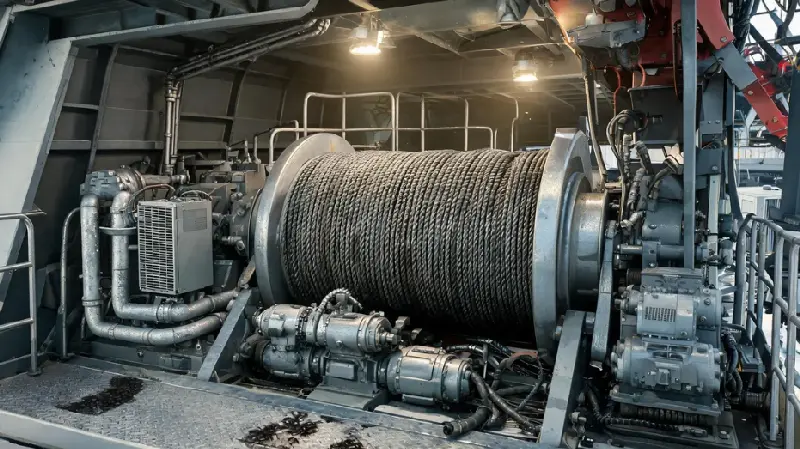
Modern frequency converters enable exceptionally fine management of motor torque by meticulously shaping the output voltage-to-frequency curve. This approach eliminates the violent mechanical shocks typically associated with conventional across-the-line motor starting. As a result, the stress exerted on critical mechanical components—such as hoisting cables, winding drums, and transmission gearboxes—is markedly reduced, directly contributing to prolonged service life.
By employing sophisticated regulation strategies like field-oriented control or direct torque management, these drives can deliver full nominal torque even at near-zero rotational speeds (below 1 Hz). Such capability is non-negotiable when positioning massive assemblies—for instance, wind turbine nacelles or precast concrete bridge segments—with millimeter-level exactness. Moreover, by integrating programmable "S-curve" velocity profiles with real-time load-angle data, the inverter technology actively mitigates pendulum effects on the suspended load. This not only shortens work cycles but also greatly improves safety when maneuvering in congested job sites.
During lifting operations, the drive’s exact torque regulation guarantees that the payload is gently raised from rest, eliminating abrupt rope tension releases or jerky pickups. In the case of crawler-mounted units, independent drives for each track benefit from synchronized control, which prevents steering deviations or "crabbing" during straight-line travel. Additionally, the system provides reliable holding torque on inclined terrains, effectively preventing unintended downhill movement.
When a suspended weight is lowered or the machine decelerates, the motor naturally enters a regenerative mode. At this point, the converter can either return the captured braking energy to the supply network (using an active front-end design) or safely disperse it through a resistor bank. This dual-function approach not only trims electrical consumption but also dramatically reduces the thermal burden and mechanical deterioration of conventional friction brakes or hydraulic retarders, which are typically prone to overheating under repeated heavy-duty cycles.
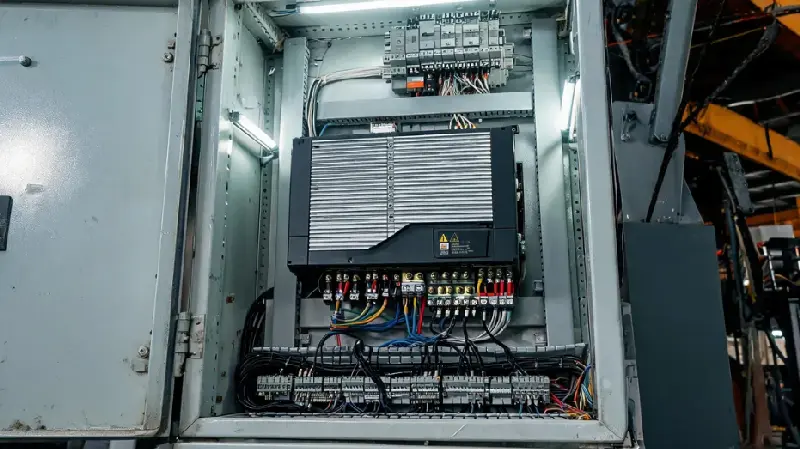
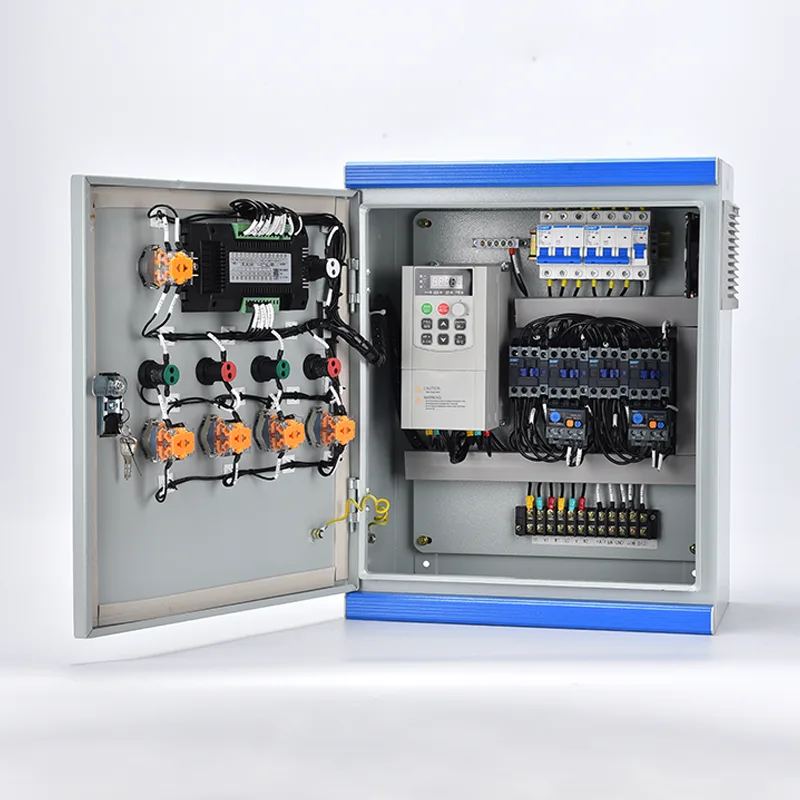
In contemporary mobile crane designs, the drivetrain functions as a tightly integrated mechatronic system. Inverter technology serves as the interface between the actuator stage and the higher-level control layer. It receives setpoints from a PLC or dedicated motion controller while simultaneously processing feedback from incremental encoders, resolvers, and hydraulic pressure sensors to form a closed-loop control structure.
Communication with the main vehicle controller is realized via high-speed industrial fieldbuses such as CANopen, PROFIBUS-DP, or EtherCAT. This digital backbone supports continuous condition monitoring, remote diagnostics, and online parameter adaptation — all of which are critical for satisfying the real-time requirements of multi-axis coordination and load-moment limiting algorithms, where inverter technology directly influences overall system responsiveness.
In summary, inverter technology is no longer an optional accessory in modern mobile cranes but a fundamental enabler of agility, safety, and energy efficiency. As the industry progresses toward greater electrification and autonomy, the role of inverter technology will continue to expand — reinforcing its position as a central component of next generation crane control architectures.