Whatsapp
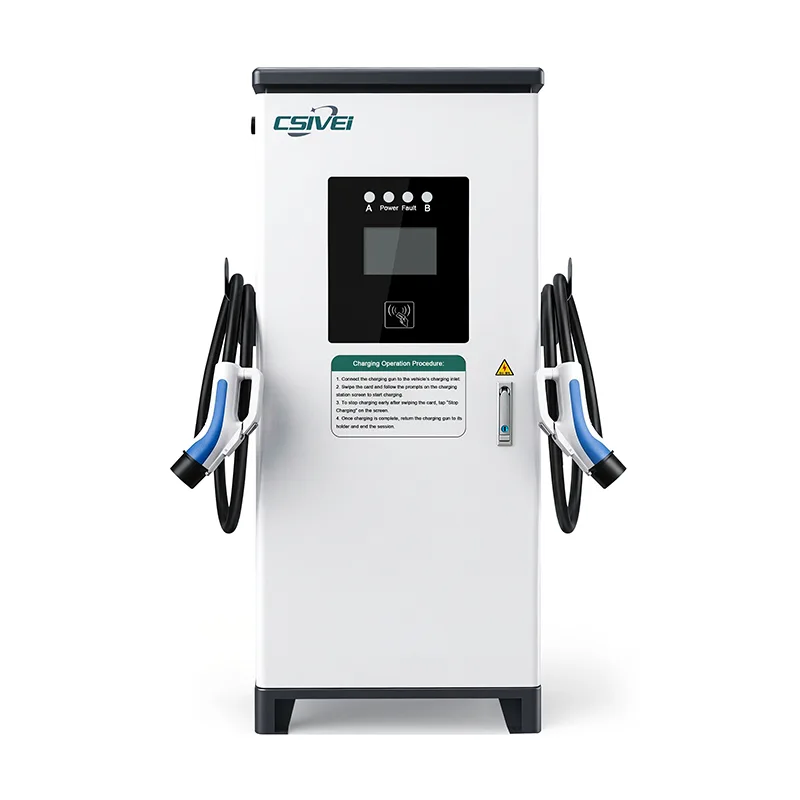
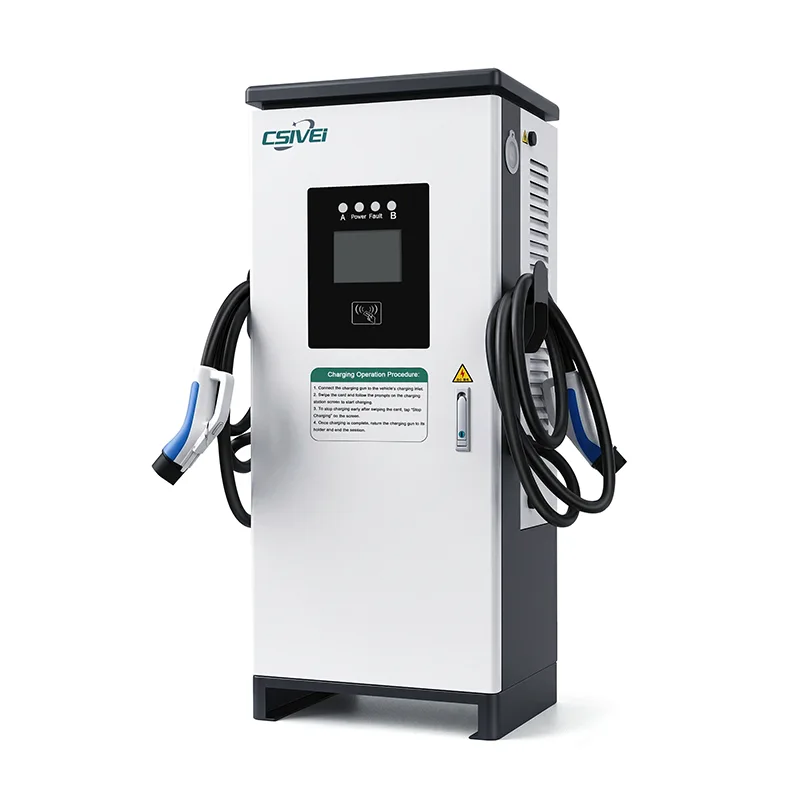
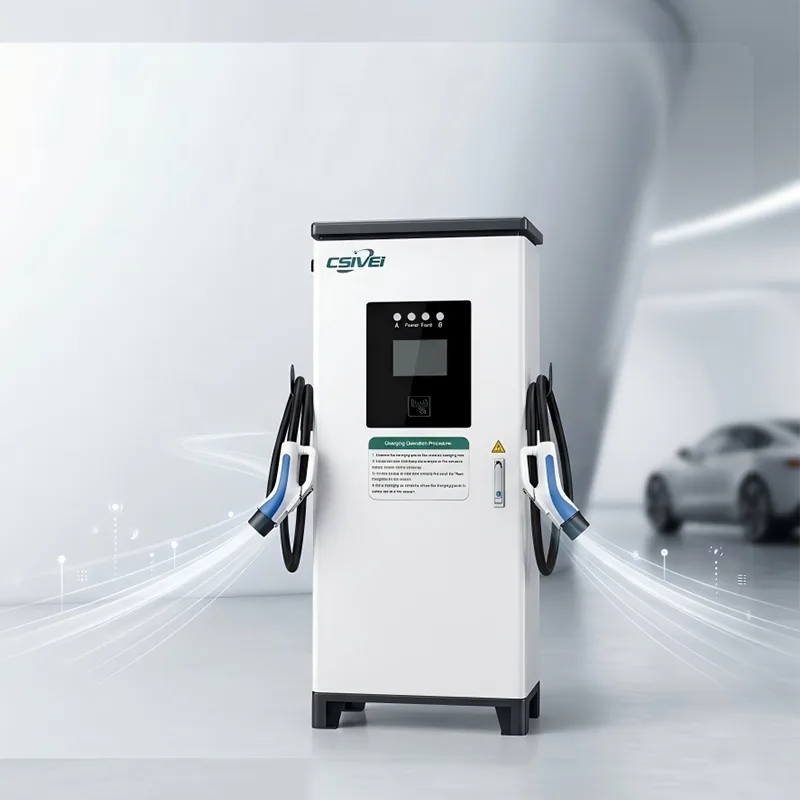
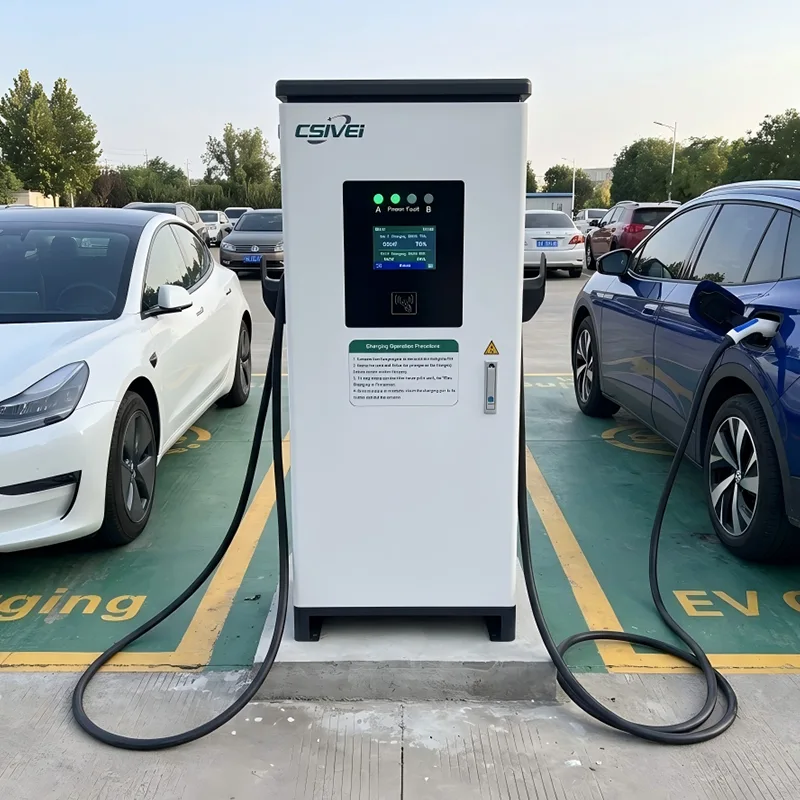
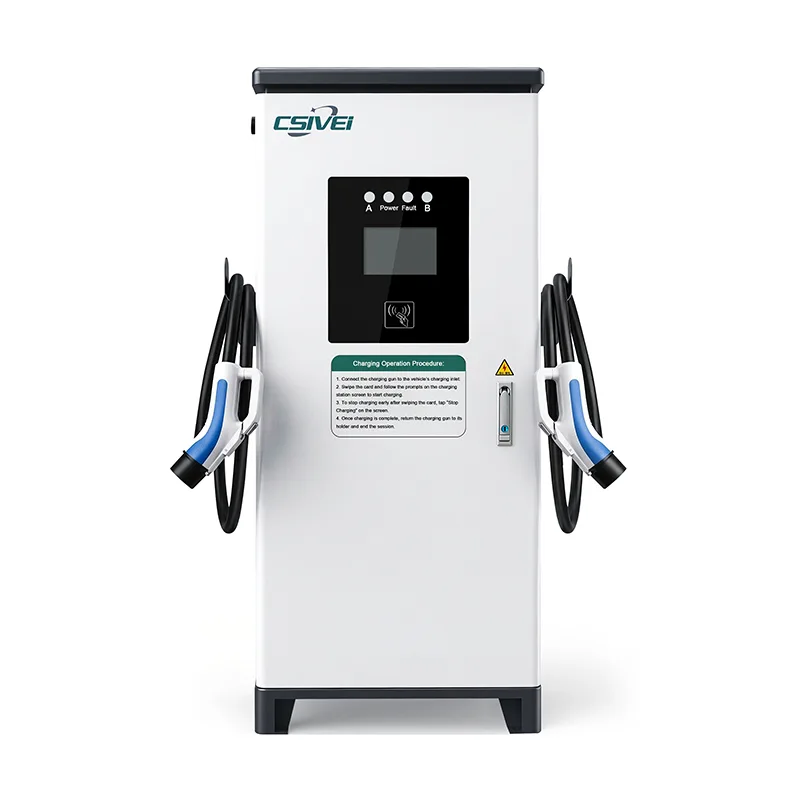
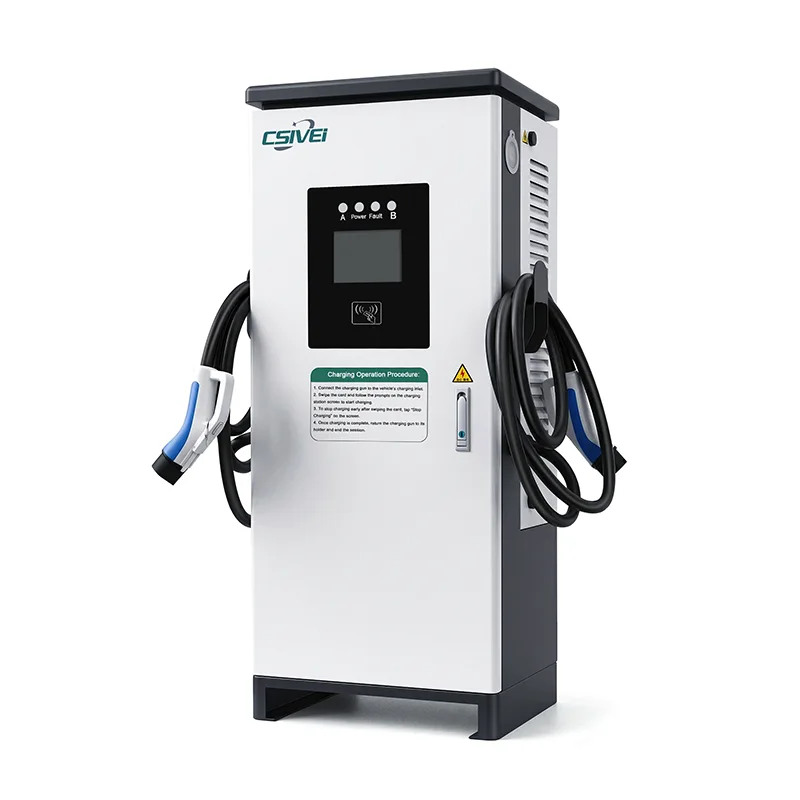
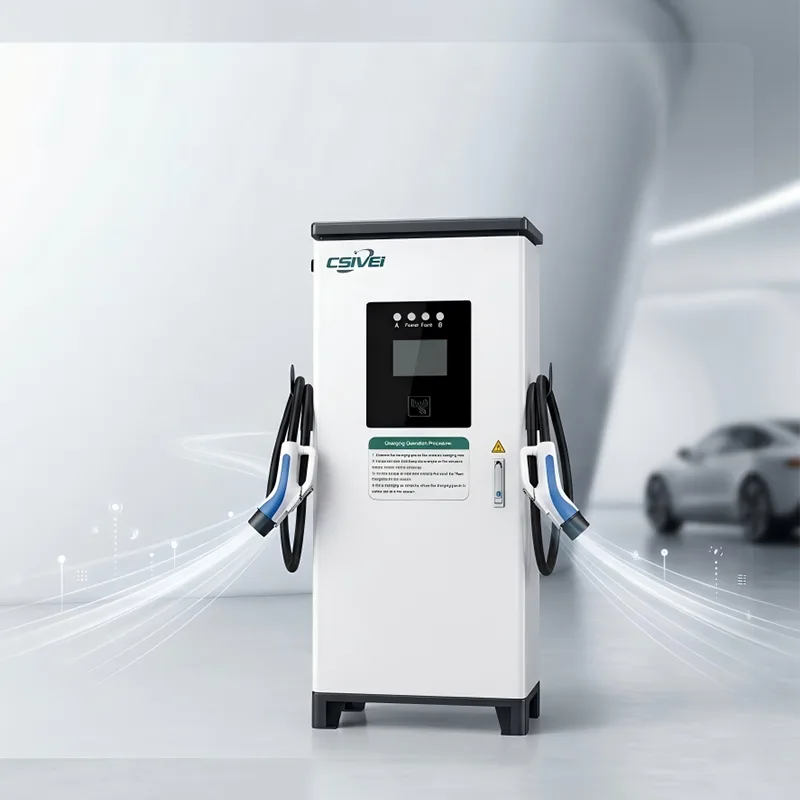
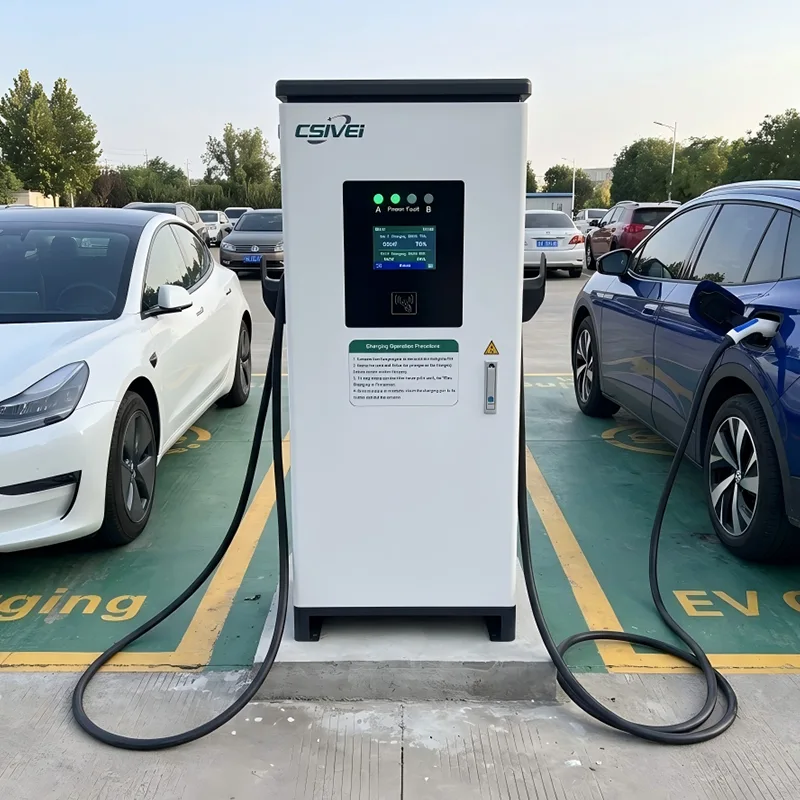
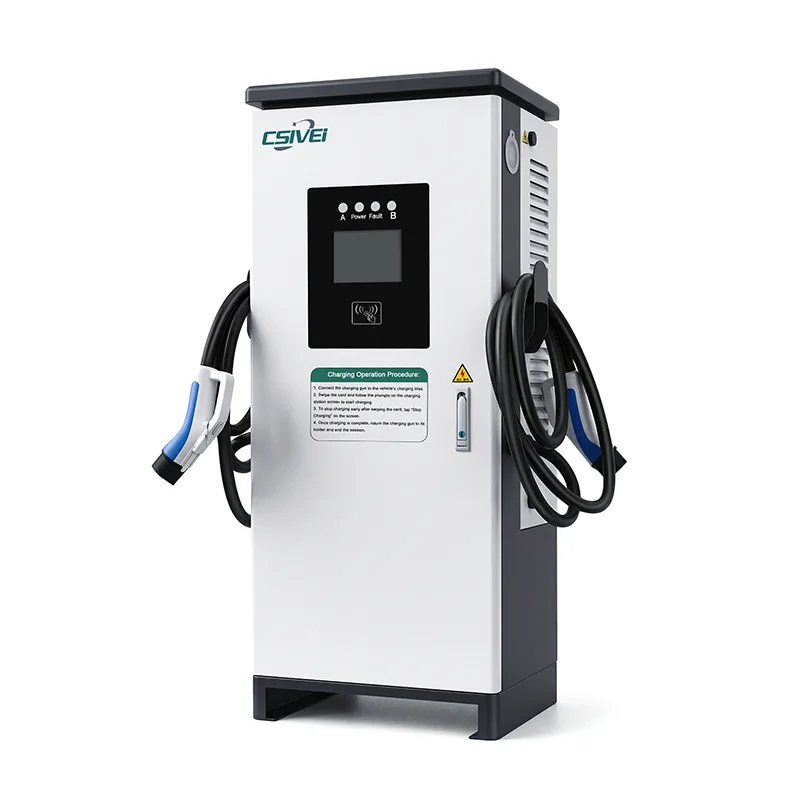
As a leading China factory specializing in commercial EV charging solutions, CSIVEI delivers the Dual-Gun Standing DC EV Charger — a high-power, dual-output charging station designed to maximise throughput in high-traffic commercial environments. This single unit serves two adjacent parking bays, dynamically allocating power between both vehicles to optimise charging efficiency, reduce infrastructure costs, and make every square metre of parking real estate work harder. With broad compatibility across CCS1, CCS2, CHAdeMO, and GB/T standards — including mixed-configuration options — this charger meets the diverse needs of global EV fleets while delivering the reliability and performance that CSIVEI is known for.
Intelligent Dynamic Load Management — Real-time power allocation splits energy between two guns based on battery state, demand, and priority rules. One vehicle gets 100% power; two vehicles share seamlessly without oversizing grid connections.
Modular Power Architecture — Hot-swappable 20kW/30kW modules operate at ≥95% efficiency. Individual modules can be replaced without shutting down the unit — the charger derates and continues serving both guns.
Multi-Standard Compatibility — Supports CCS1, CCS2, CHAdeMO, and GB/T across both guns independently. Mixed-configuration options (e.g., CCS2 + CHAdeMO) available in a single unit.
Rugged Outdoor Construction — IP55/K10 rated galvanised steel enclosure with anti-UV coating. Conformal-coated internals resist humidity and salt spray. Operates reliably from -30°C to +55°C ambient.
Independent Safety Per Gun — Each output has dedicated insulation monitoring, DC-sensitive RCD protection, and overtemperature cut-off. A fault on one gun terminates only that session — the other continues unaffected.
OCPP 1.6J/2.0.1 Compliance — Seamless backend integration with per-gun transaction logs, energy metering, and fault diagnostics. Enables independent billing and remote monitoring for each bay.
User-Friendly Access — 7-inch touchscreen with RFID and app-based authentication handles access and payment for both guns independently.
Optional Liquid-Cooled Cabling — Available for power tiers above 120kW, enabling thinner, lighter cables that remain comfortable to handle even at 500A continuous current.
Built for high-traffic commercial environments, the Dual-Gun Standing DC EV Charger serves two vehicles from a single footprint — maximising throughput, minimising per-bay infrastructure cost, and making every square metre of parking real estate work harder.
In motorway service areas, urban charging plazas, and petrol station forecourts, throughput is everything. This dual-gun unit charges two EVs simultaneously, doubling the number of vehicles served per charger during peak periods. When demand drops, the full available power can be directed to a single vehicle for faster top-ups. Operators benefit from fewer units to install and maintain while achieving the same bay coverage as a larger single-gun fleet.
For electric bus depots, last-mile delivery hubs, and taxi holding lots where multiple vehicles return at similar times, the dual-gun configuration enables parallel charging without requiring a 1:1 charger-to-bay ratio across the entire site. Dynamic load management automatically prioritises the vehicle with the earliest scheduled departure, ensuring fleet readiness while keeping peak grid demand within limits.
Shopping centres, office towers, and airport parking operators can serve two adjacent EV bays from a single central charger, halving the number of floor-mounted units required per parking row. This reduces installation complexity, leaves more usable aisle space, and simplifies maintenance access. RFID and app-based authentication make it easy to manage user access and process payments across both guns independently.
Hotels, resorts, and large-scale retail parks can install fewer chargers to cover more EV-designated bays, lowering upfront capital expenditure while still offering a premium guest amenity. The dual-gun footprint preserves landscaping and pedestrian flow, and the robust outdoor-rated enclosure withstands year-round weather without additional shelter.
The Dual-Gun Standing DC EV Charger is engineered around a high-efficiency, modular power platform that independently controls two charging sessions from a single system — maximising hardware utilisation without compromising performance or safety.
At the heart of the dual-gun system lies a real-time power allocation algorithm. The central controller continuously reads each connected vehicle's requested current, battery state of charge, and cell temperature. Based on these inputs — plus operator-defined rules such as priority billing, time-of-day tariffs, or departure deadlines — it redistributes the total available power between the two guns on a second-by-second basis. When only one vehicle is plugged in, 100% of the charger's rated output is directed to that single gun. When a second vehicle connects, the system seamlessly splits power, ensuring neither vehicle drops below its minimum charging threshold. This intelligent distribution eliminates the need to oversize grid connections and keeps energy costs predictable.
The charger is built around individual, hot-swappable power modules — typically 20kW or 30kW each — that feed into a shared DC bus. Each module operates near peak efficiency (≥95%) and can be isolated for service without interrupting the remaining modules or active charging sessions. This modularity means a single module fault does not disable the entire unit; the charger simply derates and continues serving both guns at reduced power until the module is replaced.
Dual-gun operation generates higher aggregate heat than a single-gun equivalent, especially during sustained full-power sessions in high ambient temperatures. To address this, the system employs a multi-zone cooling strategy. High-flow filtered air-cooling with variable-speed fans maintains optimal module temperatures, while dedicated thermal sensors on each gun's output path independently monitor cable and connector temperatures. For power tiers above 120kW, optional liquid-cooled cabling is available, actively removing heat from connector contacts and enabling thinner, lighter cables that remain comfortable to handle even at 500A continuous current.
Each charging gun operates with its own dedicated safety monitoring channel. Real-time insulation monitoring, DC-sensitive residual current detection (Type A + 6mA DC RCD), and over-temperature protection are independently applied to each output. If a safety threshold is breached on one gun, that session is safely terminated while the other gun continues unaffected. An emergency stop button provides immediate mechanical isolation of both outputs simultaneously.
The vehicle-to-charger interface supports CAN-based protocols (CHAdeMO, GB/T) and Power Line Communication (CCS1, CCS2) across both guns independently. This allows mixed-standard configurations — for example, one gun configured for CCS2 and the other for CHAdeMO — within the same physical unit. The embedded Linux controller handles both sessions in parallel, with full OCPP 1.6J/2.0.1 backend reporting for each gun individually, enabling per-gun transaction logs, energy metering, and fault diagnostics.
The enclosure features a galvanised steel frame with anti-UV powder coating, rated IP55 for ingress protection and IK10 for mechanical impact. Internal components receive conformal coating for humidity and salt-spray resistance. The adaptive cooling system maintains stable internal conditions from -30°C to +55°C ambient, making the unit suitable for coastal, desert, and alpine deployments without additional shelter.
Q1: How does power distribution work when two vehicles are charging at the same time?
The charger's intelligent dynamic load management system continuously monitors each connected vehicle's battery state, requested current, and session parameters. It automatically splits the total available power between the two guns in real time. When only one vehicle is plugged in, it receives 100% of the charger's rated output. When a second vehicle connects, power is divided based on demand and operator-defined rules — ensuring both vehicles charge efficiently without exceeding the charger's total capacity.
Q2: Can the two guns serve vehicles with different charging standards?
Yes. The charger supports mixed-standard configurations within a single unit. Common setups include one CCS2 gun and one CHAdeMO gun, or both CCS2. Each gun operates independently with its own communication protocol, allowing the unit to serve different EV makes and models simultaneously without compatibility issues.
Q3: What happens if one gun encounters a fault during a dual session?
Each gun has its own independent safety monitoring channel. If a fault — such as an insulation resistance drop or overtemperature event — is detected on one output, only that session is safely terminated. The other gun continues charging unaffected. An emergency stop button is also provided to mechanically isolate both outputs instantly if needed.
Q4: What are the space and installation advantages compared to installing two single-gun chargers?
A single dual-gun unit serves two adjacent parking bays from one floor-mounted footprint, reducing the number of chargers, concrete pads, and electrical connections required per row. This saves installation time, frees up aisle space, and simplifies long-term maintenance — all while delivering the same two-bay charging coverage.
Q5: What grid connection capacity is required?
Grid requirements depend on the configured total output power. A 120kW unit typically requires a three-phase input with appropriately rated breaker and cabling. Because the dynamic load management system optimises power distribution in real time, peak grid draw is often lower than the sum of two independent chargers under the same conditions. Our engineering team provides detailed electrical planning guides and can assist with site-specific load calculations.
Q6: Can I monitor and bill each gun separately?
Yes. The OCPP 1.6J/2.0.1 compliant backend reports each gun as an independent charging point with its own transaction logs, energy metering, and fault diagnostics. This allows per-gun billing, per-bay pricing strategies, and detailed utilisation reporting — exactly as if operating two separate chargers.
Q7: What maintenance does the dual-gun system require?
Routine maintenance is straightforward — periodic air filter cleaning, visual cable inspections, and connector contact checks. The modular power architecture allows individual modules to be hot-swapped without shutting down the entire unit. Should a module require replacement, the charger continues operating the remaining modules and serving both guns at a temporarily reduced power level until service is completed.
A Regional Fast-Charging Network Operator — Urban Charging Plaza Deployment
An independent charge point operator running a network of urban and suburban fast-charging stations planned a new flagship plaza near a major retail and entertainment district. The site needed to serve high volumes of EVs during peak evening and weekend hours, with minimal wait times and maximum bay turnover.
The operator's existing sites used single-gun DC chargers in a 1:1 charger-to-bay configuration. While effective, this model required two chargers, two concrete pads, two sets of electrical connections, and two maintenance points for every two parking bays. At the new plaza, where land and construction costs were significant, the operator wanted to reduce ground space and installation costs without sacrificing the number of bays served during peak demand.
After evaluating the site's parking layout — pairs of adjacent bays with a shared central island — the operator recognised the dual-gun standing unit as the ideal fit. One charger placed centrally between two bays could serve both simultaneously, halving the number of physical units, foundations, and power drops needed per bay pair.
The dynamic load management feature was decisive. During peak hours, the charger intelligently splits power between two connected vehicles, keeping both sessions progressing. During quieter periods with only one vehicle plugged in, 100% of the rated output is directed to that single gun for the fastest possible turnaround. This flexibility allowed the operator to offer competitive per-minute pricing without over-investing in electrical infrastructure.
Thirty of our Dual-Gun Standing DC EV Charger — each configured with dual CCS2 guns — were installed across 60 parking bays. Floor-mounted units were placed on shared central islands, serving one bay to the left and one to the right. OCPP backend integration enabled per-gun transaction reporting, independent billing for each bay, and remote load monitoring across the entire plaza.
● The operator halved the number of charger units required compared to a single-gun deployment, saving significantly on equipment, civil works, and electrical infrastructure.
● Peak-hour throughput increased by approximately 40% compared to predictions based on single-gun data from existing sites, directly attributable to dual-gun simultaneous charging.
● The intelligent power split kept peak grid draw within the site's allocated capacity, avoiding costly grid upgrades.
● Maintenance teams appreciated servicing one unit per two bays, reducing routine inspection time and spare parts inventory.
● Following the plaza's successful launch, the operator standardised on dual-gun units for all subsequent high-traffic sites.


Address
No. 3788, Liujiang Road, Liushi Town, Yueqing City, Wenzhou City, Zhejiang Province, China
Tel
If you have any enquiry about quotation or cooperation, please feel free to email us at sanchia@csivei.com or use the following inquiry form.Our sales representative will contact you within 24 hours. Thank you for your interest in our products.
WhatsApp:8615705777705