Products
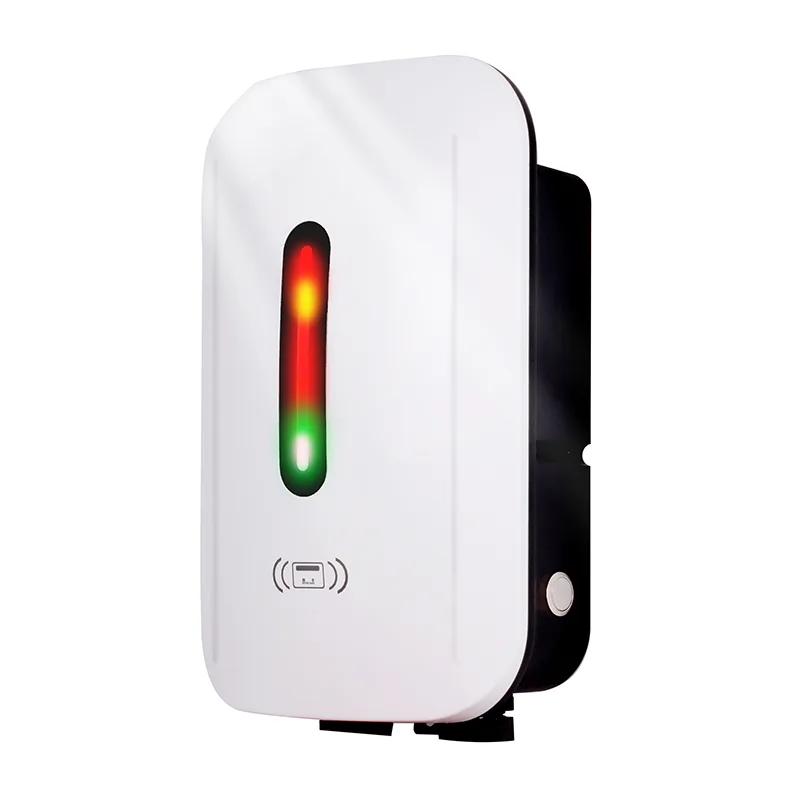
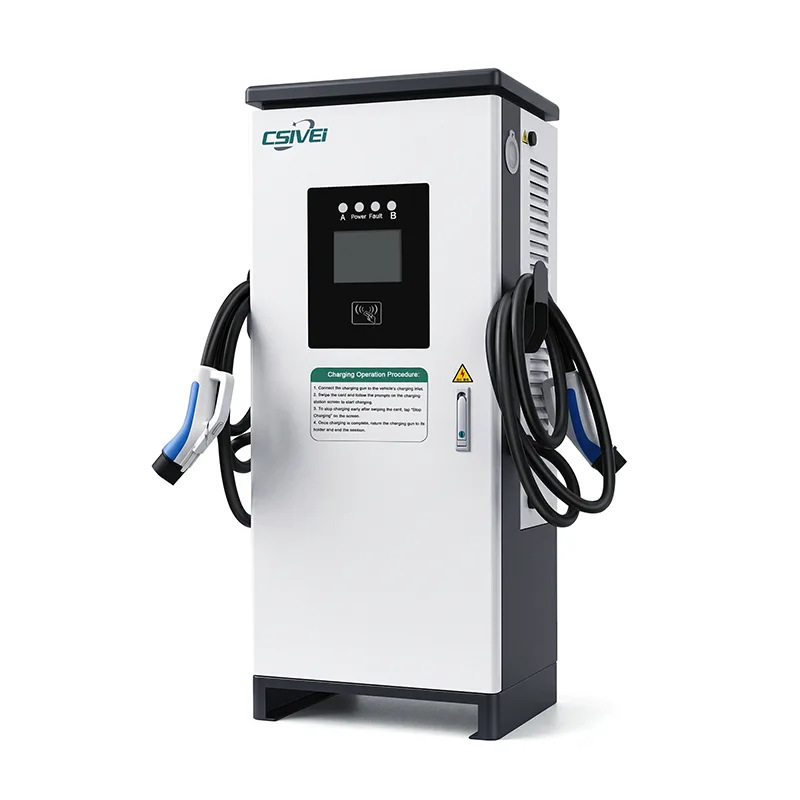
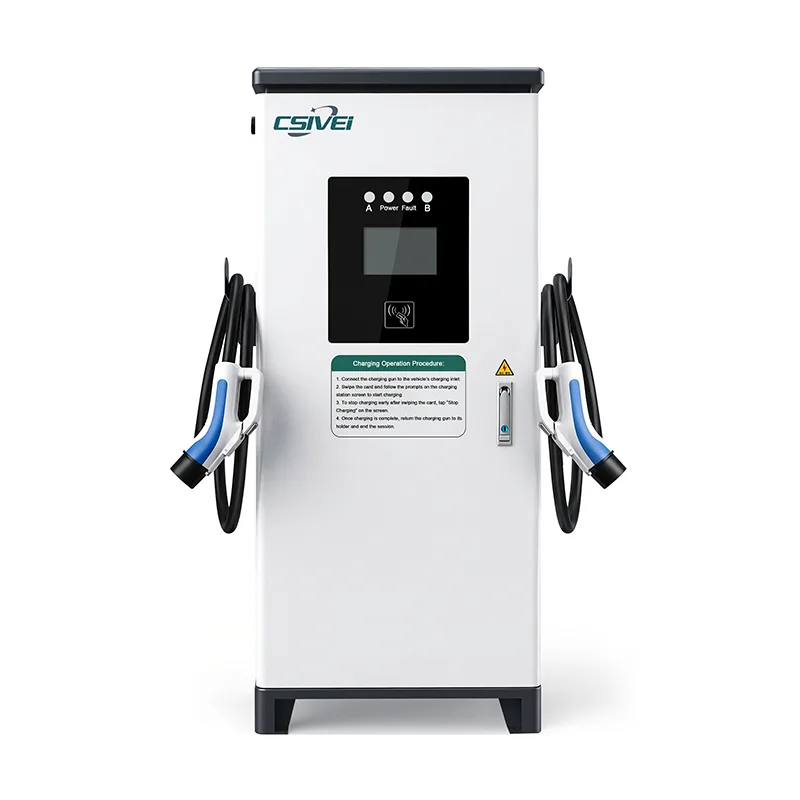
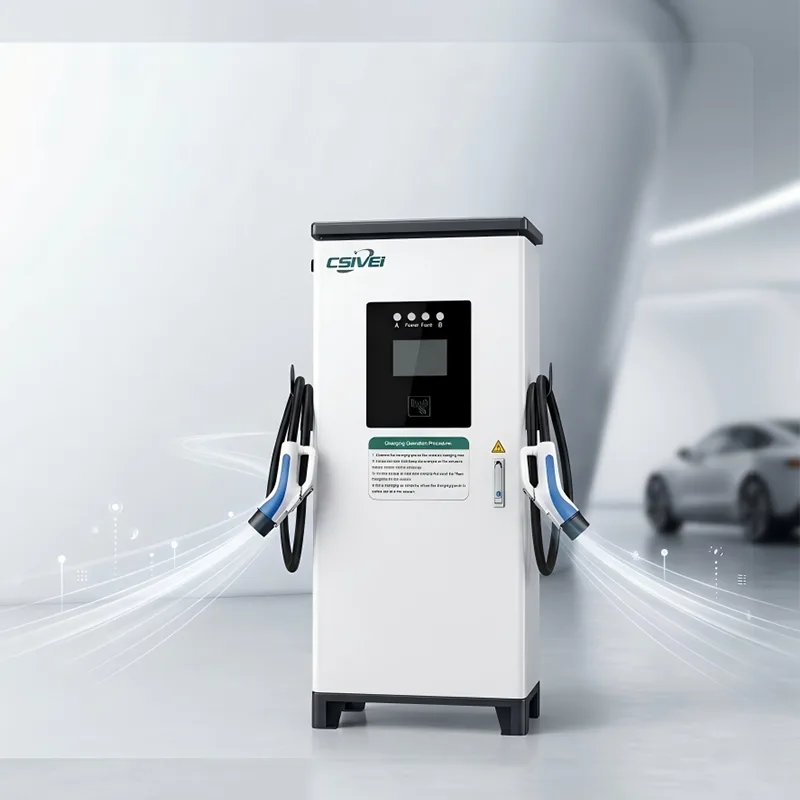
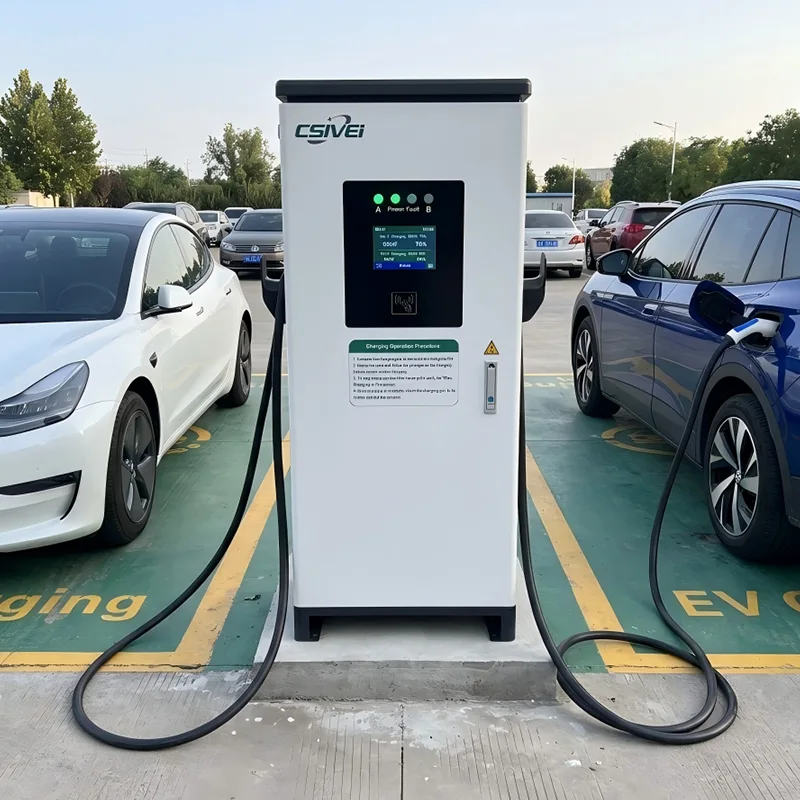
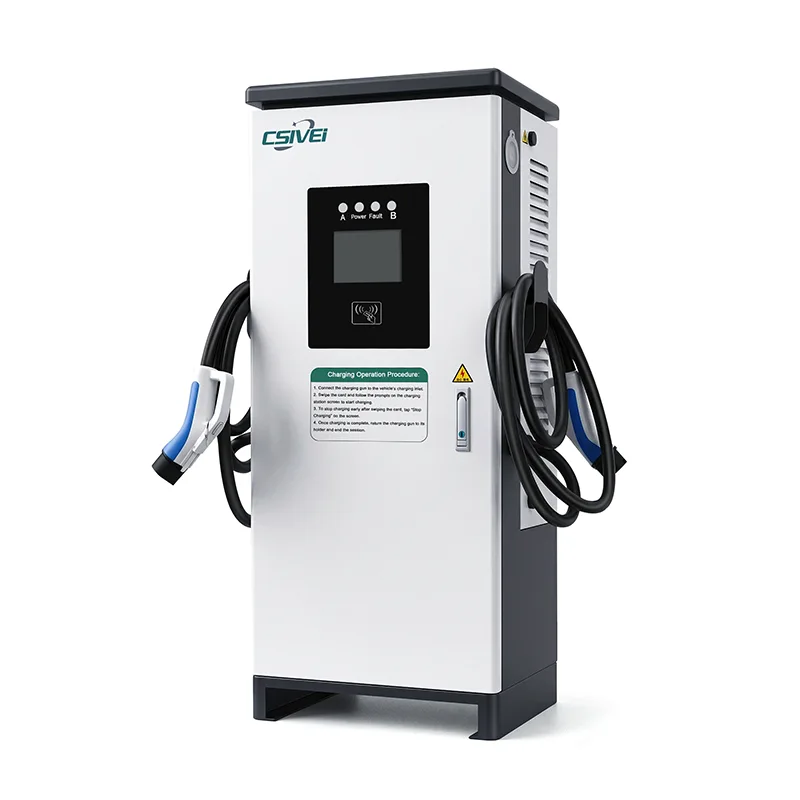
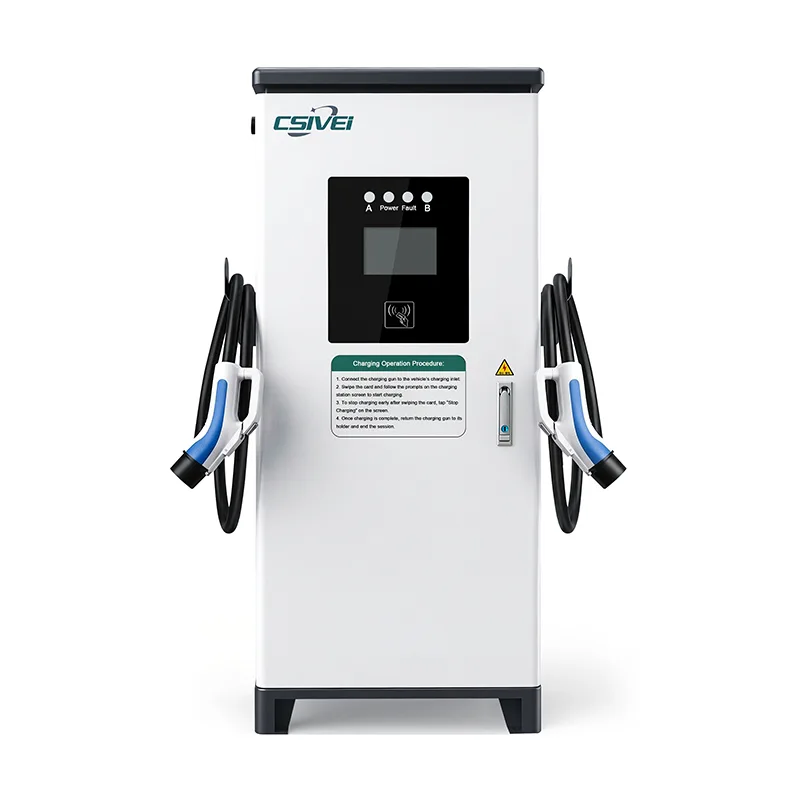
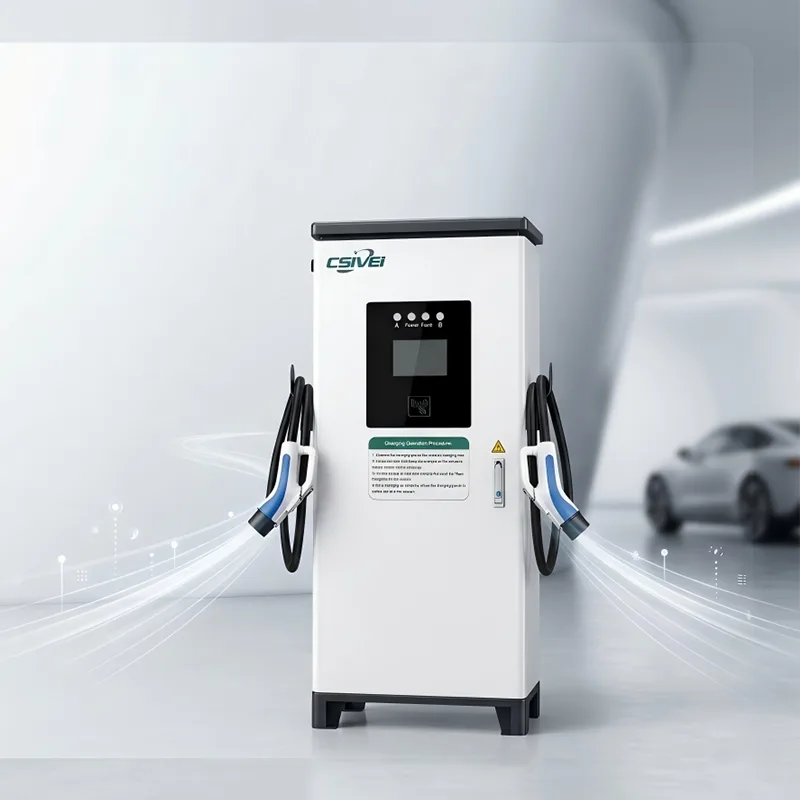
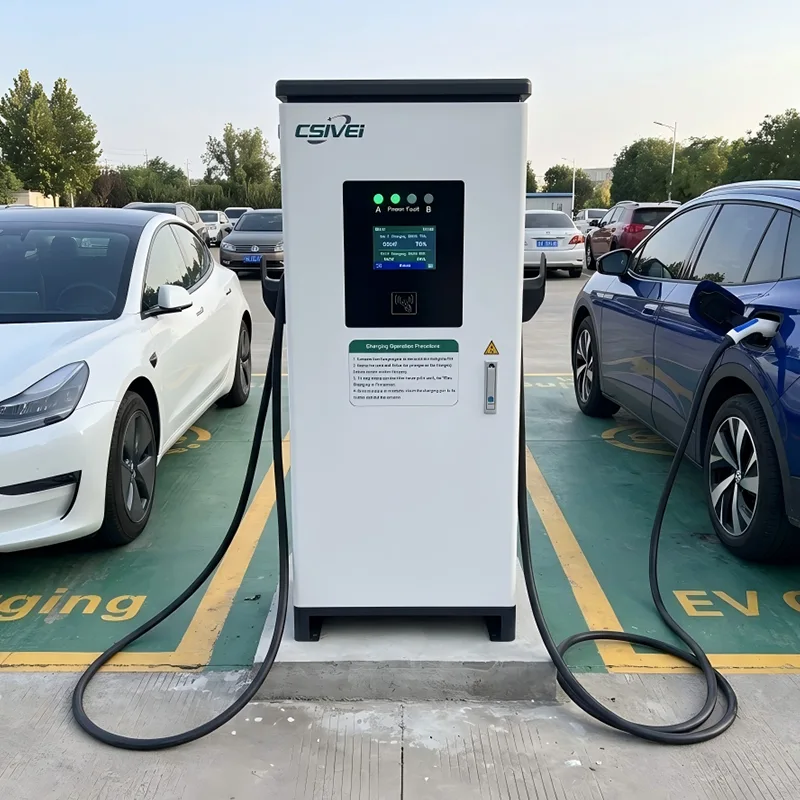
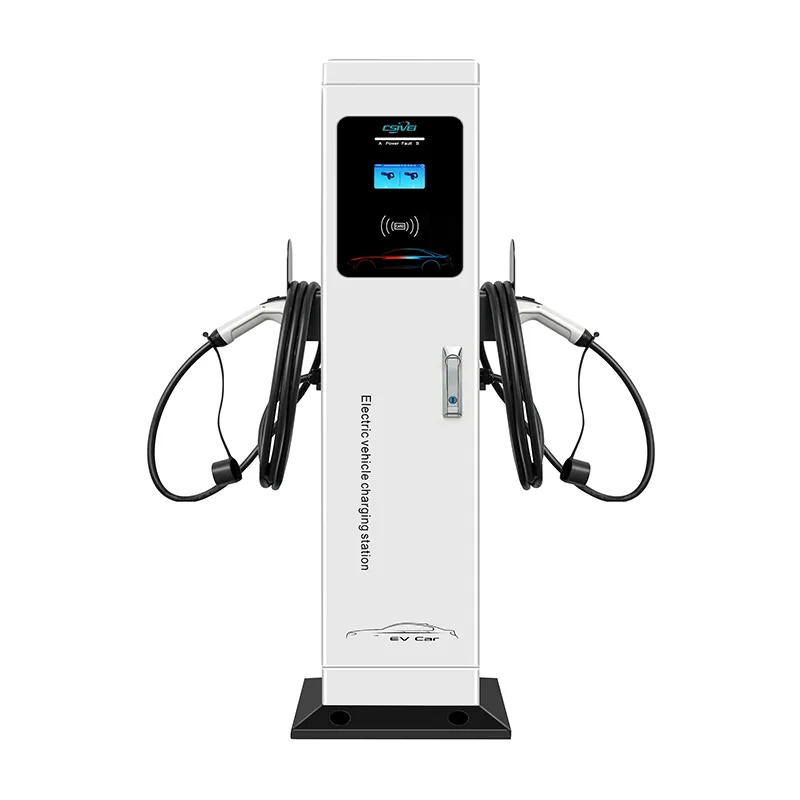
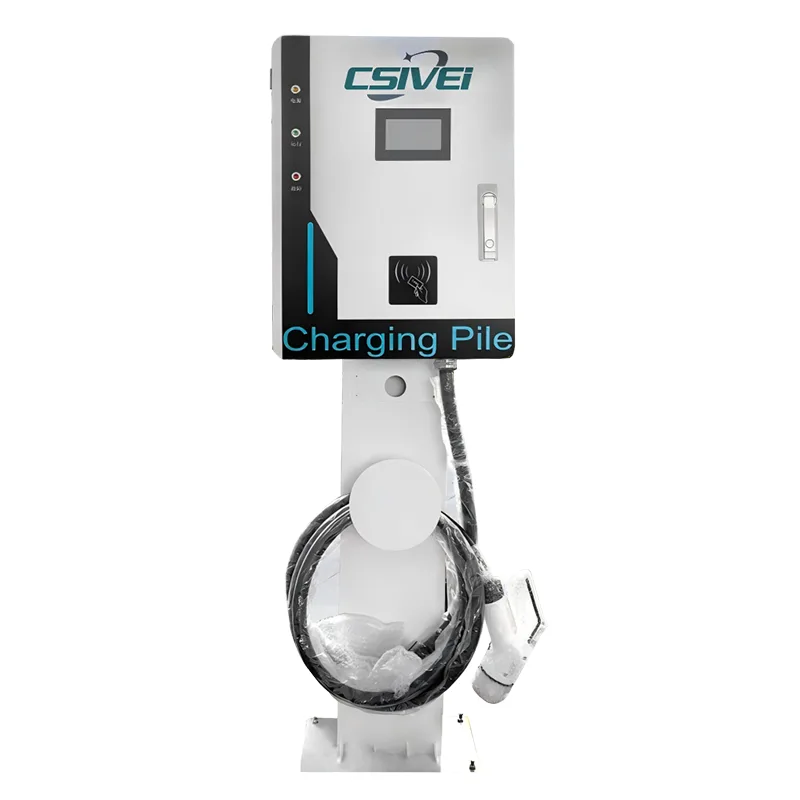
50KW EV Charger DC Charging Station
  • 50KW EV Charger DC Charging Station50KW EV Charger DC Charging Station
  • 50KW EV Charger DC Charging Station50KW EV Charger DC Charging Station
  • 50KW EV Charger DC Charging Station50KW EV Charger DC Charging Station
  • 50KW EV Charger DC Charging Station50KW EV Charger DC Charging Station

50KW EV Charger DC Charging Station

As a professional EV charger manufacturer and supplier from China, our factory delivers the 50KW EV Charger DC Charging Station — a compact, wall-hung DC fast charger that serves two vehicles simultaneously without occupying valuable floor space. With intelligent dynamic power distribution and an optional pedestal kit for wall-free locations, it maximises charging throughput within the tightest parking environments. Backed by in-house R&D and certified production, we provide a space-efficient, high-utilisation charging solution for commercial operators who need more from every square metre.

Designed for 30kW–80kW output, this 50KW EV Charger DC Charging Station offered by leading China manufcaturer CSIVEI can charge two EVs simultaneously while dynamically distributing power according to vehicle demand and battery status. When only one vehicle is connected, full charging power is allocated to a single gun; when a second vehicle plugs in, power is automatically balanced to maximise charging efficiency and bay utilisation.


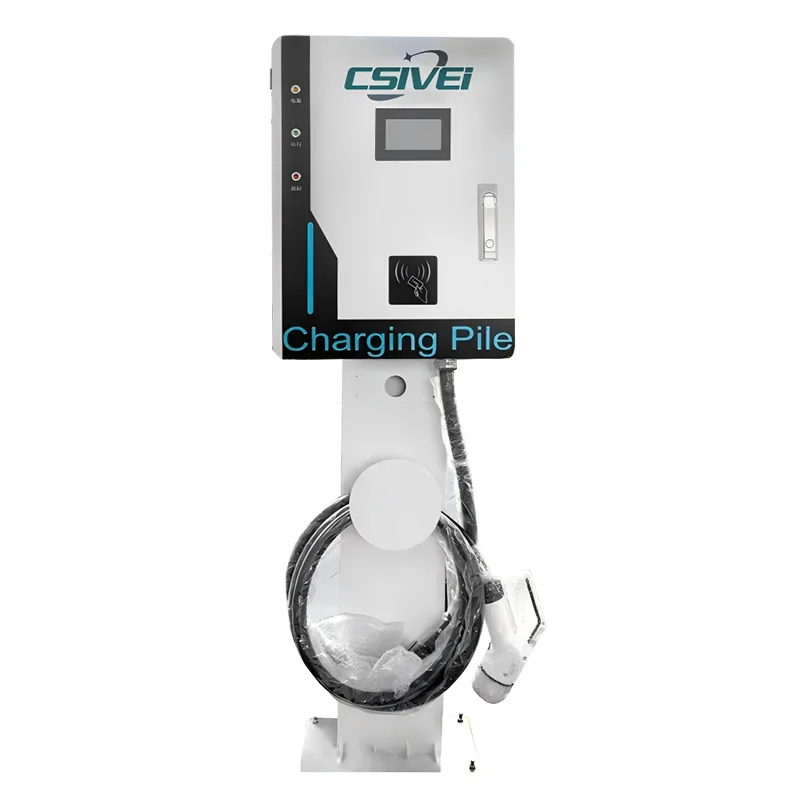
The compact wall-mounted design installs directly on walls or structural columns, eliminating the need for concrete foundations and saving valuable parking space. An optional steel pedestal enables free-standing installation for open-site applications.


Supporting CCS1, CCS2, CHAdeMO, and GB/T standards, the 50KW EV Charger DC Charging Station can be configured with mixed connector combinations to accommodate diverse EV fleets. Each charging gun operates independently with dedicated metering, safety protection, and OCPP 1.6J/2.0.1 communication.


The IP55-rated enclosure is built for demanding parking environments, while integrated cable holders, insulation monitoring, DC leakage protection, over-temperature protection, and emergency stop functions ensure safe and reliable operation throughout every charging session.

Product Applications

Where floor space is scarce but charging demand is high, the 50KW EV Charger DC Charging Station mounts onto existing vertical surfaces and serves two vehicles from one compact unit. With an optional pedestal accessory, it adapts to any parking layout while keeping ground areas clear and operational.

1. Underground & Multi-Storey Commercial Parking

In basement car parks serving shopping centres, office towers, and mixed-use complexes, every square metre of floor space is contested. This 50KW EV Charger DC Charging Station installs directly onto perimeter walls or structural columns, serving two adjacent bays from one unit without taking up any ground area. The dual-gun configuration halves the number of wall-mounted units required per parking row, reducing installation cost, power distribution complexity, and long-term maintenance burden. Drivers benefit from fast charging within the existing bay layout, while operators gain maximum charging capacity from minimal wall real estate

2. Hotel, Residential & Workplace Parking Facilities

Properties offering EV charging as a guest, tenant, or employee amenity often face limited electrical capacity and tight parking layouts. A single dual-gun wall-mounted unit serves two dedicated EV bays from one electrical connection, simplifying load management. RFID and app-based authentication enable per-user billing across each gun independently, so a hotel can bill a guest on Gun 1 while an office tenant uses Gun 2 on their own account — all from one charger. The wall-mounted profile keeps pedestrian walkways clear and preserves the clean aesthetic expected in premium parking environments.

3. Fleet Depots with Perimeter Infrastructure

Small to mid-sized fleet operators — such as last-mile delivery hubs, municipal service centres, and corporate car pools — often park vehicles against building walls or perimeter fencing. Wall-mounting dual-gun DC chargers along these boundaries serves two fleet vehicles per unit without consuming yard space needed for vehicle manoeuvring and storage. Scheduled charging via OCPP backend can sequence sessions to align with off-peak tariffs, and the dual-gun capability ensures two vehicles are ready per shift cycle without needing twice the hardware.

4. Dealerships & Multi-Brand Showrooms

Dealership groups servicing multiple EV brands need fast, brand-agnostic charging within limited workshop and display bays. A dual-gun wall-mounted unit above the service bay charges two vehicles side by side, keeping tools, technicians, and customer walkways unobstructed. Mixed gun configurations — one CCS2, one CHAdeMO — allow the same unit to serve different vehicle makes simultaneously, reducing the number of separate chargers required in a multi-brand service area.

5. Surface Lots & Open-Air Car Parks

Where perimeter walls or columns are absent, the optional pedestal kit transforms each unit into a compact free-standing charger serving two bays from a single slim column. This allows mixed wall-mount and pedestal deployments across one site using a single standardised charger model, simplifying specification, procurement, and spare parts stocking. The pedestal footprint is a fraction of a full floor-standing cabinet, preserving valuable parking space in high-density surface lots.


Product Features

The 50KW EV Charger DC Charging Station integrates two independent DC outputs into a compact wall-mountable chassis — achieving high power density and dual-vehicle throughput within the spatial constraints of wall-hung deployment.

Compact Dual-Output Power Architecture

At the system core, a shared DC bus is fed by modular hot-swappable rectifier units — typically 15kW to 20kW each — operating at ≥95% conversion efficiency. The total installed module capacity defines the charger's maximum output, configurable from 30kW to 80kW. A centralised power allocation controller dynamically distributes available DC bus capacity between the two output channels on a second-by-second basis. When only one vehicle is connected, 100% of bus capacity routes to that single gun. When a second vehicle plugs in, the controller continuously evaluates each vehicle's requested current, battery voltage, and state of charge, then reallocates power to maximise total throughput while respecting each battery's charging curve limits. This architecture enables the compact chassis to deliver dual-vehicle service without the bulk of two independent power trains.

Thermal Engineering for Wall-Mount Dual-Gun Operation

Sustained dual-gun charging in a wall-mounted enclosure presents a concentrated thermal challenge — two simultaneous sessions generate more aggregate heat than a single-gun equivalent, yet the chassis must remain compact for wall-hung installation. The solution combines a sealed, partitioned airflow path with high-static-pressure variable-speed fans. Air is drawn through front-facing filtered intakes, forced across the power module bank, and exhausted through side vents — preventing recirculation of hot air even when the rear of the unit is flush against a wall. Dedicated thermal sensors on each gun's output contactor and connector track temperature independently per channel. If one gun approaches thermal limits, its output is throttled individually without affecting the other ongoing session. Conformal coating protects all PCBs from condensation, dust, and the corrosive trace gases sometimes found in enclosed parking structures.

Independent Per-Gun Safety and Control

Each gun operates with a fully independent safety monitoring channel. Insulation resistance is continuously measured per output before and during every charge. A Type A + 6mA DC-sensitive residual current detection circuit monitors each gun separately, and contactor welding detection runs on both channels. If a fault condition is detected on Gun 1, only that session terminates; Gun 2 continues operating unaffected. An emergency stop button on the front panel mechanically isolates both outputs simultaneously when required. This independent per-gun safety architecture means the dual-gun wall-mounted unit offers the same protection integrity as two separate single-gun chargers.

Multi-Protocol Dual-Gun Communication

An embedded Linux controller manages both guns as separate charging points, each with its own CAN and PLC communication stack. This supports mixed-standard configurations — for instance, Gun 1 communicating via CCS2 PLC while Gun 2 uses CHAdeMO CAN — within a single physical unit. OCPP 1.6J/2.0.1 backend connectivity reports each gun as a distinct charge point with independent transaction logs, energy metering, and fault diagnostics, enabling per-bay billing and granular utilisation analytics.

Structural Design and Cable Management

The enclosure uses lightweight galvanised steel with anti-corrosion powder coating, IP55-rated and IK10 impact-resistant. A reinforced multi-point mounting bracket distributes load across wall anchors suitable for concrete, brick, or structural steel. The unit's centre of mass sits close to the wall plane, minimising cantilever forces on fixings. Two side-mounted cable holsters — one per gun — integrate into the chassis profile, keeping both cables off the ground and positioned at an ergonomic height. Cable routing channels are built into the enclosure sides to prevent tangling between the two guns.

Pedestal Adaptability

The optional pedestal kit uses the same mounting bracket interface as wall installation, requiring no internal hardware modifications. The galvanised steel column includes an integrated cable management channel and a heavy-duty base plate for anchor-bolt fixation. This allows sites to deploy the same charger model in both wall-mount and pedestal configurations, simplifying project logistics and long-term spare parts management.

Grid-Friendly Load Management

The dynamic load management system not only balances power between the two connected vehicles but can also interface with site-level energy management systems via OCPP or Modbus. This allows the charger to adjust total draw in response to building load, solar generation, or time-of-day tariff signals — keeping peak demand charges under control while still delivering dual-vehicle charging throughput.


Customer Case

A City-Centre Office and Retail Complex — Underground Parking Charging Overhaul

Background

A prominent commercial property group managing a flagship office and retail complex in a dense Asian metropolitan area needed to introduce DC fast charging across two levels of underground parking. Tenants — including multinational corporations, premium retail brands, and co-working operators — were increasingly demanding EV charging as a core building amenity. Management set an ambitious target: equip a significant number of bays for fast charging without reducing the total number of available parking spaces.

The Challenge

The existing underground car park was designed decades before mainstream EV adoption, presenting severe constraints:

●  Parking bays were dimensioned to minimum regulatory standards, with tight clearances on all sides.

●  Driving aisle widths could not accommodate floor-standing charger cabinets without obstructing vehicle circulation or creating blind spots.

●  Structural columns were frequent but distributed irregularly; perimeter walls offered the most consistent mounting surfaces.

●  The building's electrical infrastructure had limited spare capacity, making power efficiency critical.

●  Any construction work had to be phased to avoid disrupting daily office and retail operations.

●  The property group initially evaluated floor-standing chargers but quickly abandoned the idea. Cabinets positioned at the head of bays would protrude into aisles. Those placed between bays would consume entire parking spaces. The result would be a net loss of parking capacity — the exact outcome management wanted to avoid.

Why Dual-Gun Wall-Mounted DC Chargers?

The solution emerged from a simple observation: the perimeter walls running along both sides of the parking levels provided long, uninterrupted mounting surfaces directly adjacent to rows of parking bays. A dual-gun wall-mounted charger placed on the wall between two adjacent bays could serve both from a single unit elevated entirely off the ground.

This approach delivered immediate advantages over alternatives:

●  Zero floor space consumed — every bay remained available for vehicle parking.

●  One unit serving two bays halved the number of chargers, mounting points, and electrical connections required per row compared to single-gun wall-mounted units.

●  The compact chassis profile, mounted flush to the wall, maintained full aisle width for vehicle circulation.

●  Installation required no concrete cutting, no ground anchoring, and minimal disruption — all cabling ran through existing wall-side cable trays.

●  The dual-gun dynamic load management kept peak power draw per unit within the building's available electrical capacity.


For a small number of middle-row bay pairs where no wall or column was accessible, the optional pedestal kit was specified. This allowed the same charger model to be deployed on a slim freestanding column, maintaining the one-unit-per-two-bays logic without introducing a different product into the project.

Deployment

Sixty of our 60kW dual-gun wall-mounted DC chargers — each configured with dual CCS2 guns — were installed across the two underground levels. Fifty-four units were wall-mounted along perimeter walls; six units used the pedestal kit for middle-row locations. The project was executed in three phases, each completed during weekend hours to avoid weekday disruption. All chargers were integrated into the building's centralised OCPP backend, enabling access via existing tenant access cards, per-bay billing, and centralised energy monitoring.

Results

●  The complex created EV fast-charging capacity across 120 parking bays while losing zero parking spaces — a condition for project approval from day one.

●  The dual-gun configuration reduced the total number of charger units by half compared to a single-gun alternative, cutting equipment cost, installation labour, and electrical distribution complexity.

●  Peak power draw stayed within the building's allocated capacity, eliminating the need for a costly grid connection upgrade.

●  Tenant satisfaction surveys recorded a measurable increase in scores related to building amenities, with EV charging cited as a key reason for lease renewals.

●  The property group has since adopted the same dual-gun wall-mounted specification for retrofit projects at two additional properties, with the pedestal option providing consistent deployment logic across varied parking layouts.

●  Maintenance teams reported that servicing one unit for every two bays simplified routine inspections and reduced spare parts diversity compared to single-gun deployments.

Frequently Asked Questions

Q1: How does dual-gun charging work when two vehicles are plugged in simultaneously?

The charger's dynamic load management system continuously monitors each vehicle's battery voltage, state of charge, and requested current. Available power is split between the two guns in real time to maximise overall throughput. When only one vehicle is plugged in, it receives 100% of the charger's rated output. The transition to split-power mode is fully automatic and seamless.


Q2: Can the two guns charge different vehicle brands with different connector standards?

Yes. The 50KW EV Charger DC Charging Station supports mixed gun configurations — for example, one CCS2 and one CHAdeMO within the same unit. Each gun operates as an independent charging point with its own communication protocol and safety monitoring, serving two different EV makes and models simultaneously.


Q3: What happens if one gun develops a fault during a dual session?

Each gun has independent insulation monitoring, residual current detection, and overtemperature protection. A fault on one gun terminates only that session; the other gun continues charging normally. The front-panel emergency stop button isolates both outputs instantly if required.


Q4: What wall types are suitable for mounting this dual-gun charger?

The unit mounts onto solid concrete, brick, or structural steel columns using a reinforced multi-point bracket. Load-bearing capacity should be confirmed during site survey. Our installation guide provides full mounting templates and anchor specifications for your electrical contractor.


Q5: How does the pedestal option work?

For sites without suitable walls — such as open surface lots or middle-row parking bays — an optional galvanised steel pedestal is available. It uses the same mounting bracket as the wall version, requiring no internal hardware changes. The pedestal includes an integrated cable channel and floor plate, and can be installed alongside wall-mounted units at the same site.


Q6: What power output is available, and why is it lower than floor-standing dual-gun chargers?

This 50KW EV Charger DC Charging Station is offered from 30kW to 80kW total output. This range is optimised for wall-mount thermal management and typical building electrical capacity at sites like underground car parks and office garages. For higher power requirements, our floor-standing dual-gun DC chargers offer 60kW to 240kW configurations.


Q7: Can each gun be billed and monitored separately?

Yes. OCPP 1.6J/2.0.1 connectivity reports each gun as an independent charge point with separate transaction logs, energy metering, and diagnostics. This enables per-bay billing, per-user pricing, and detailed utilisation tracking — as if operating two separate chargers from one physical unit.


Q8: Is maintenance more complex with two guns in one wall-mounted unit?

No. The front panel provides access to all serviceable components. Individual power modules are hot-swappable without removing the unit from the wall. Routine maintenance — filter cleaning, cable inspection, connector checks — is identical to a single-gun unit. Because both guns share the same power module bank, spare parts inventory is simplified compared to maintaining two separate chargers.

Dual-Gun Standing DC EV ChargerDual-Gun Standing DC EV ChargerDual-Gun Standing DC EV ChargerDual-Gun Standing DC EV Charger

Hot Tags: 50KW EV Charger DC Charging Station
Send Inquiry
Contact Info

If you have any enquiry about quotation or cooperation, please feel free to email us at sanchia@csivei.com or use the following inquiry form.Our sales representative will contact you within 24 hours. Thank you for your interest in our products.


WhatsApp:8615705777705

Web:www.csiveivfd.com


X
We use cookies to offer you a better browsing experience, analyze site traffic and personalize content. By using this site, you agree to our use of cookies.Privacy Policy
RejectAccept