Whatsapp
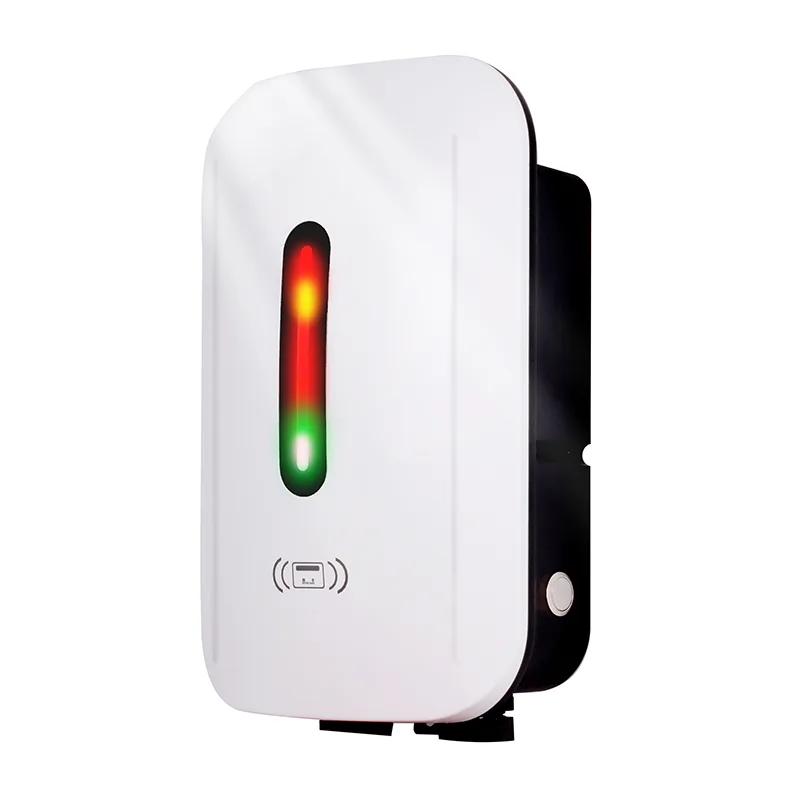
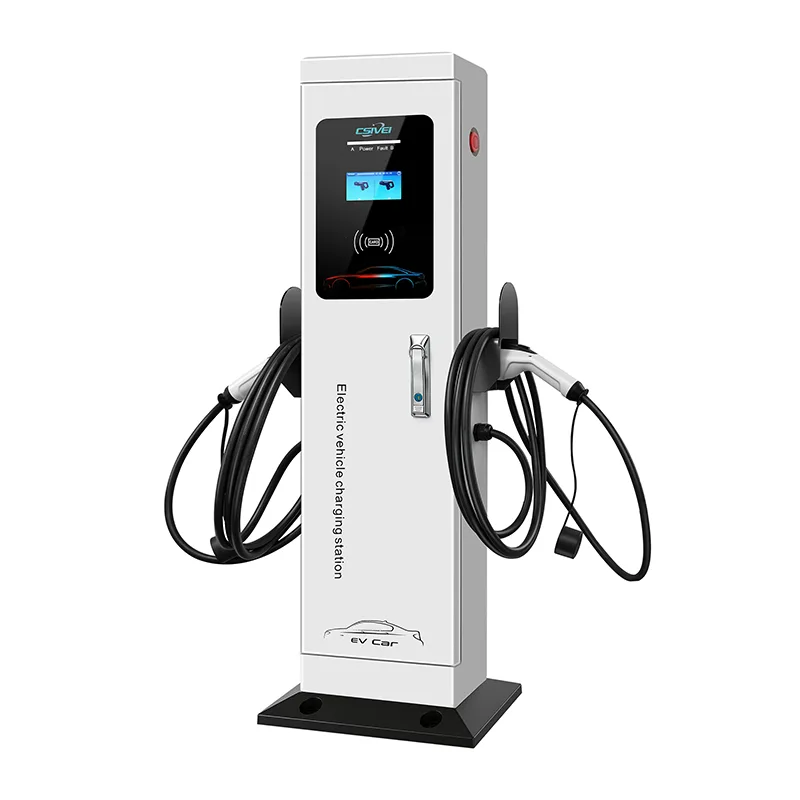
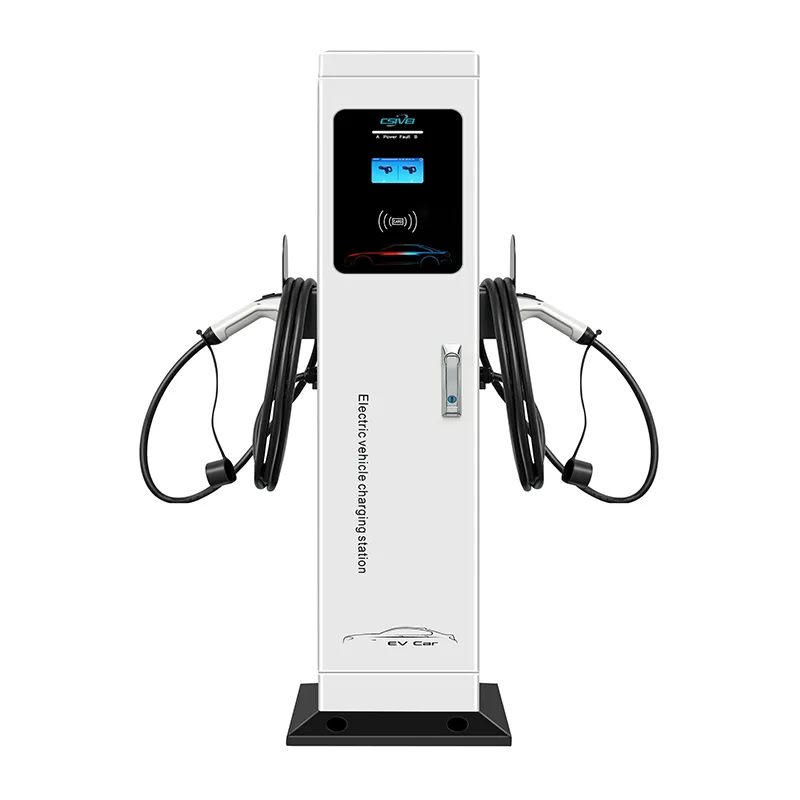
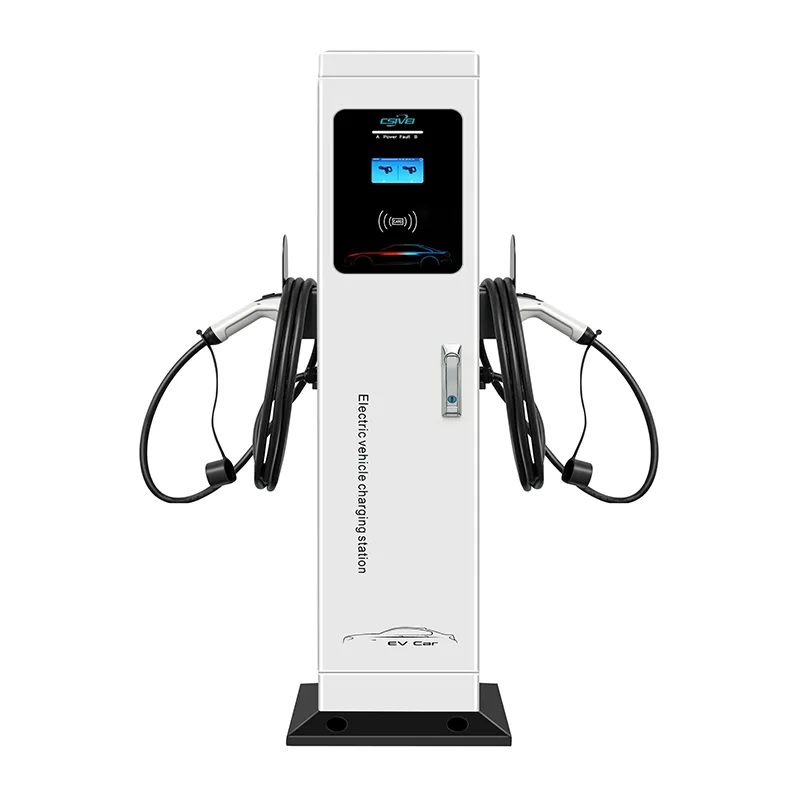
Designed for 7kW to 22kW per gun configurations, CSIVEI factory's quality Dual-Gun Electric Car Charger Station directly serves two adjacent parking bays from one chassis, halving the number of wall units required per parking row.
The integrated dynamic load management automatically prioritises one car when alone, and splits capacity evenly when both are charging.
Each gun operates as an independent charge point with its own energy meter, RFID reader, and OCPP 1.6J backend identity, enabling separate billing and access control per bay.
The IP55-rated powder-coated steel enclosure withstands outdoor conditions from -30°C to +55°C, with conformally coated electronics for damp or dusty environments. Two 5-metre Type 2 cables with dedicated side holsters keep connectors tidy and off the ground. Comprehensive electrical safety — including Type A + 6mA DC-sensitive residual current protection, overcurrent, and surge protection — is applied independently to each output.
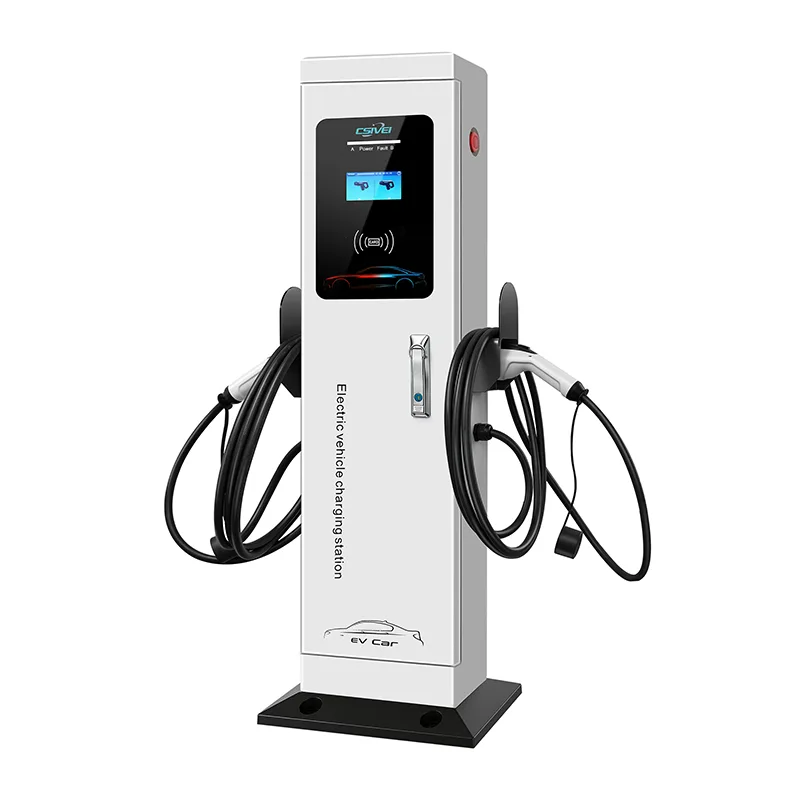
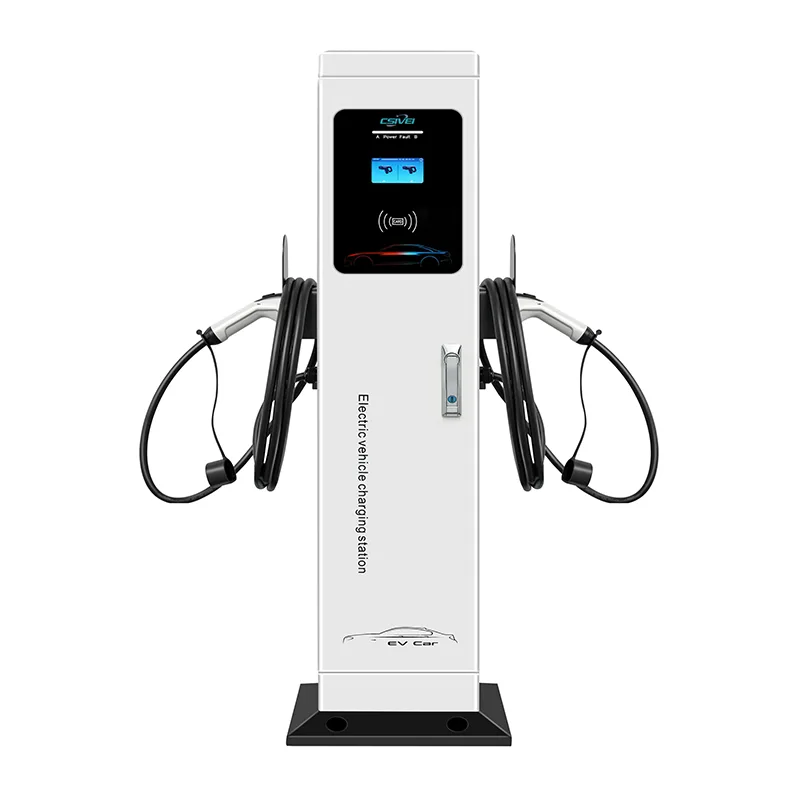
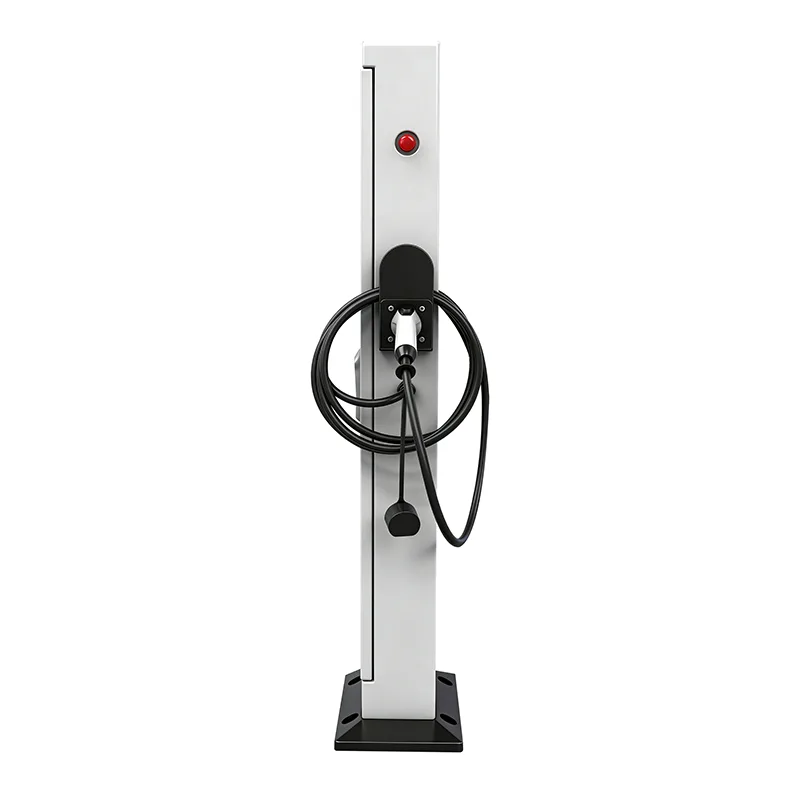
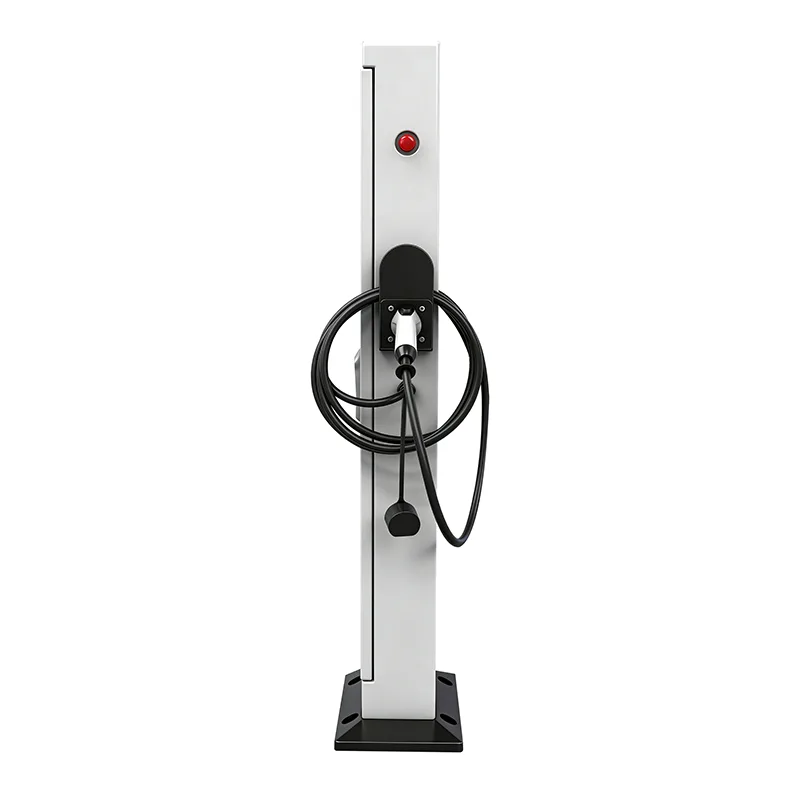
For locations without suitable walls, an optional pedestal column allows the same unit to be deployed as a slim freestanding charger, unifying product specification across any site.
When every square metre of wall and floor counts, the Dual-Gun Electric Car Charger Station doubles charging capacity from a single mounting point. It is the logical choice for paired parking bays where space, electrical capacity, and budget must be optimised.
In shared underground or covered parking, residents with two adjoining bays can share one dual-gun charger mounted on a central column or side wall. Each user has a dedicated gun linked to their personal RFID card and billing account. The building gains maximum EV coverage from minimal electrical runs, while dynamic load balancing keeps the overall demand safely within the building's supply limit.
Employers can serve two employees' vehicles per charger, dramatically reducing the number of wall-mounted units along parking area perimeters. Staff plug in for the full workday, and the charger intelligently shares power. The OCPP platform allows the company to offer charging as a free amenity or per-user billing, all managed remotely.
Hotels, shopping centres, and gyms can provide guest charging at two marked bays from a single wall-mounted unit near the entrance or along a parking deck wall. The clean, compact installation leaves more wall space for signage or pedestrian access. Guests start a session via QR code or hotel key card, and each bay is billed independently.
Small fleets — such as delivery vans or car-share pods — that return to a depot with perimeter walls or structural columns can use dual-gun wall chargers to service two vehicles per unit. Scheduled charging via the backend staggers sessions across the fleet night, reducing peak load. The simple wall-mount setup avoids trip hazards and clutter in vehicle movement areas.
For surface lots without walls, the optional pedestal kit allows identical dual-gun chargers to be deployed on slim columns between bay pairs. A single project can use wall-mounted units along building edges and pedestal units in open rows, all managed as one uniform charger family. This cuts procurement complexity and spare parts diversity.
The quality Dual-Gun Electric Car Charger Station integrates two independent, fully metered charging points into one compact chassis, engineered for efficient installation and long-term reliability.
An onboard controller monitors the total available grid capacity and the real-time demand of both connected vehicles. Each gun complies with IEC 61851-1 Mode 3, with independent Control Pilot communication. When both cars are charging, the system dynamically splits the rated current — for example, a 32A three-phase supply delivers 11kW per gun simultaneously. If only one vehicle is connected, the full 22kW (or 7kW, depending on model) is directed to that single output. Static split or priority-based allocation can also be configured via the backend.
Each charging outlet has its own MID-certified energy meter (optional) and ISO 14443 RFID reader. This means two users can authenticate, start, and pay for charging independently, with no interference. The control board treats each gun as a separate OCPP charge point, providing per-bay transaction logs, remote start/stop, and fault diagnostics.
Every output benefits from a dedicated Type A residual current device plus 6mA DC-sensitive protection per IEC 62955, ensuring safe disconnection even in the event of smooth DC earth leakage. Overcurrent, overvoltage, and surge protection are duplicated for each gun. If a fault occurs on one side, only that session terminates; the other continues unaffected. A lockable front-panel emergency stop mechanically isolates both outputs simultaneously.
The enclosure is fabricated from galvanised steel with a UV-stabilised powder coat, rated IP55 and IK10. It mounts securely on concrete, brick, or structural steel using a multi-point bracket designed to keep the weight close to the wall. The unit operates from -30°C to +55°C. Internal electronics are conformally coated, and a filtered ventilation design prevents dust ingestion while allowing heat dissipation.
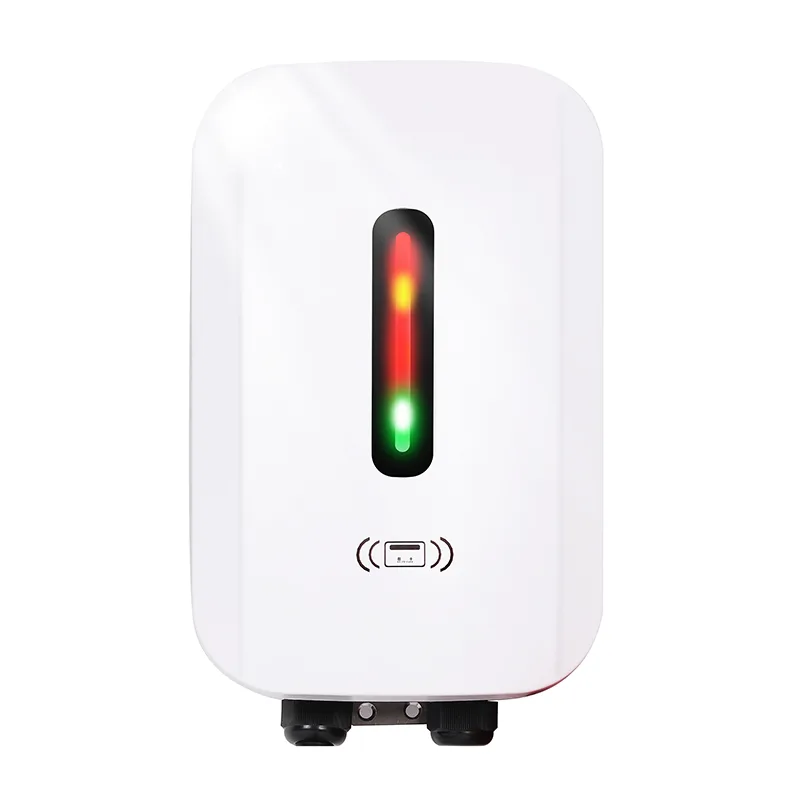
A high-visibility LED status ring per gun gives drivers immediate visual confirmation. Connectivity options include Wi-Fi, Ethernet, and 4G, with OCPP 1.6J/2.0.1 support as standard. Local offline caching ensures no transaction data is lost. The system supports smart charging schedules, solar self-consumption integration via Modbus RTU/TCP, and dynamic load management across multiple chargers at a site.
Each gun features a 5-metre Type 2 tethered cable (Type 1 available) with an ergonomic connector. Independent side holsters keep both cables off the floor when not in use, reducing wear and trip hazards. The holster placement routes cables cleanly away from vehicle doors.
For deployment away from walls, a galvanised steel pedestal column is offered. It uses the same mounting interface as wall installation, requiring zero internal modifications. The pedestal integrates cable routing and a robust floor plate, allowing a single charger model to serve every parking layout on a site.
Q1: Can both guns charge at the maximum rated power simultaneously?
Yes and no — it depends on your electrical supply. If the supply is sufficient for the sum of both guns, they can charge at full power simultaneously. However, in most installations with a limited supply (e.g., 32A three-phase for a 22kW per gun model), the dynamic load management splits power — typically 11kW per gun when both are occupied. When only one vehicle is plugged in, it gets the full 22kW.
Q2: Are the two charging outlets billed independently?
Absolutely. Each gun has its own energy meter and OCPP point ID. Your backend platform will see two separate charge points, allowing you to set different tariffs, user access lists, and billing accounts for each bay.
Q3: What happens if one side has a fault while the other is charging?
Safety is fully independent. A fault on Gun A will terminate only that session; Gun B continues charging without interruption. The emergency stop button mechanically isolates both if needed.
Q4: What kind of wall do I need for installation?
The bracket is designed for solid concrete, brick, or structural steel columns. We provide a full mounting template and anchor specifications. If no suitable wall is available, the optional pedestal kit turns it into a freestanding charger.
Q5: Can this Dual-Gun Electric Car Charger Station be used outdoors?
Yes. Its IP55 and IK10 ratings mean it is built for permanent outdoor exposure, rain, dust, and UV. It operates in temperatures from -30°C to +55°C, making it suitable for almost any climate.
Q6: How does the pedestal option work?
The pedestal is a floor-mounted column that the same charger unit attaches to. No internal hardware changes are needed. It is ideal for open parking lots, and allows you to mix wall-mounted and pedestal chargers across one project using a single product type.
Q7: What maintenance is required?
Routine maintenance involves an annual inspection of cables, connectors, and the enclosure. The front cover opens for full access, and the modular design means components like RFID boards or relays can be quickly swapped. Having two guns in one unit means less total hardware to service compared to two separate single-gun chargers.
Q8: Can I integrate it with my solar panels or energy management system?
Yes. The charger supports Modbus RTU/TCP and OCPP smart charging profiles. It can charge only when surplus solar is available, or follow a schedule to avoid peak demand charges.
A Modern Residential Tower — Optimising Limited Underground Parking
A high-rise residential building in a dense city centre offered two levels of underground parking for its 150 apartments. The owners’ committee wanted to add EV charging for residents, but the garage was already fully allocated with tight tandem and side-by-side bays. Losing any parking space to charging infrastructure was out of the question.
The car park’s layout consisted of narrow bays arranged in pairs along structural columns and perimeter walls. Floor-standing chargers were impossible — they would block doors or encroach on already minimal aisle width. Single-gun wall-mounted chargers would require one unit per bay, meaning two physical chargers, two power cable runs, and two wall mounting points for every pair of adjacent bays. The electrical room also had limited spare capacity, making load management critical.
The paired bay design was a perfect match for the dual-gun concept. By mounting one dual-gun wall charger on the column between two adjacent resident bays, the building could serve two vehicles from a single electrical feed and a single mounting point. This immediately halved the number of chargers, power feeds, and wall brackets required compared to single-gun units.
Dynamic load sharing solved the capacity issue. Even at peak hours when neighbours returned home around the same time, the charger split its 32A supply between the two cars, keeping the total load predictable. If one resident was away, the other got the full charge speed.
Access control was per gun: each resident had an RFID card linked to their apartment account. The OCPP backend billed them directly for their own consumption, making it as fair as individual electricity meters.


Address
No. 3788, Liujiang Road, Liushi Town, Yueqing City, Wenzhou City, Zhejiang Province, China
Tel
If you have any enquiry about quotation or cooperation, please feel free to email us at sanchia@csivei.com or use the following inquiry form.Our sales representative will contact you within 24 hours. Thank you for your interest in our products.
WhatsApp:8615705777705