Whatsapp
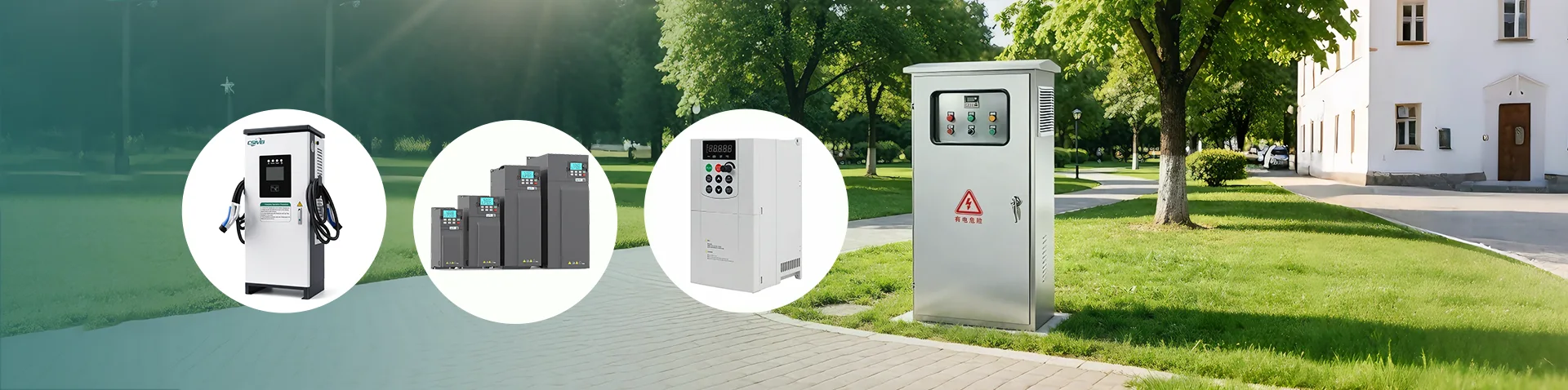
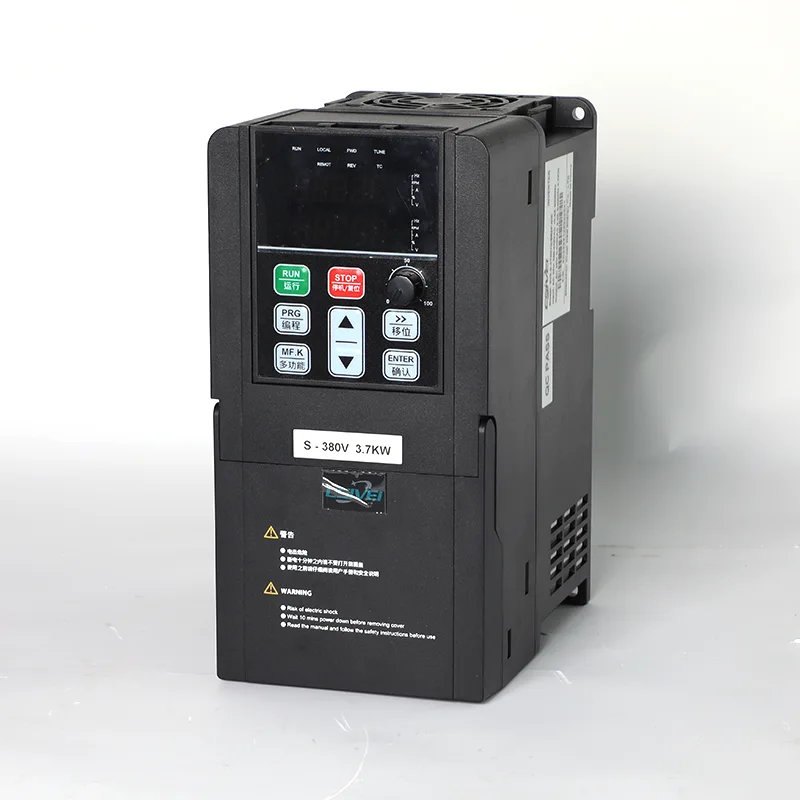
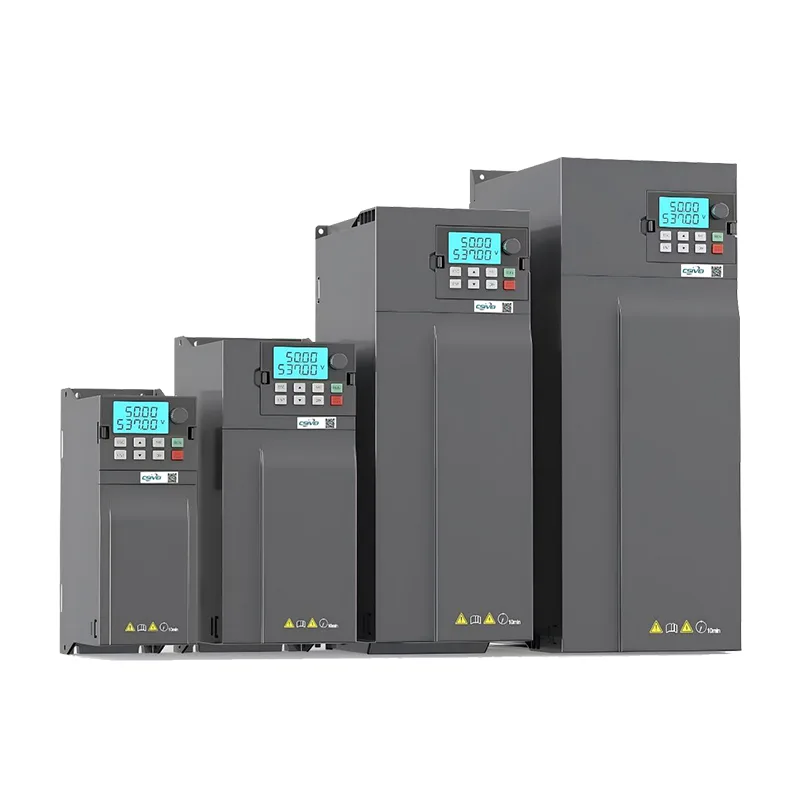
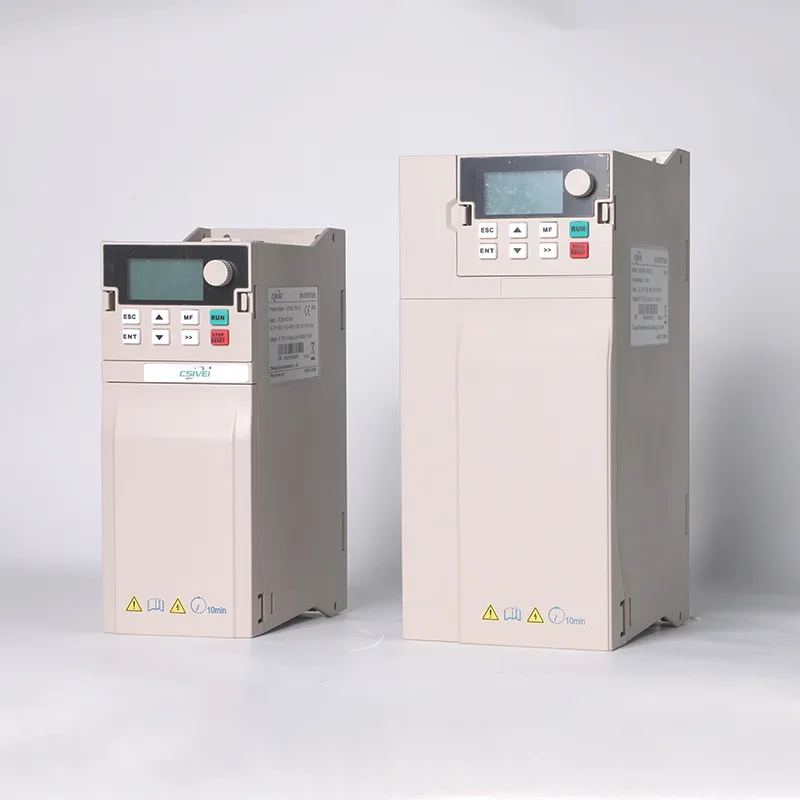
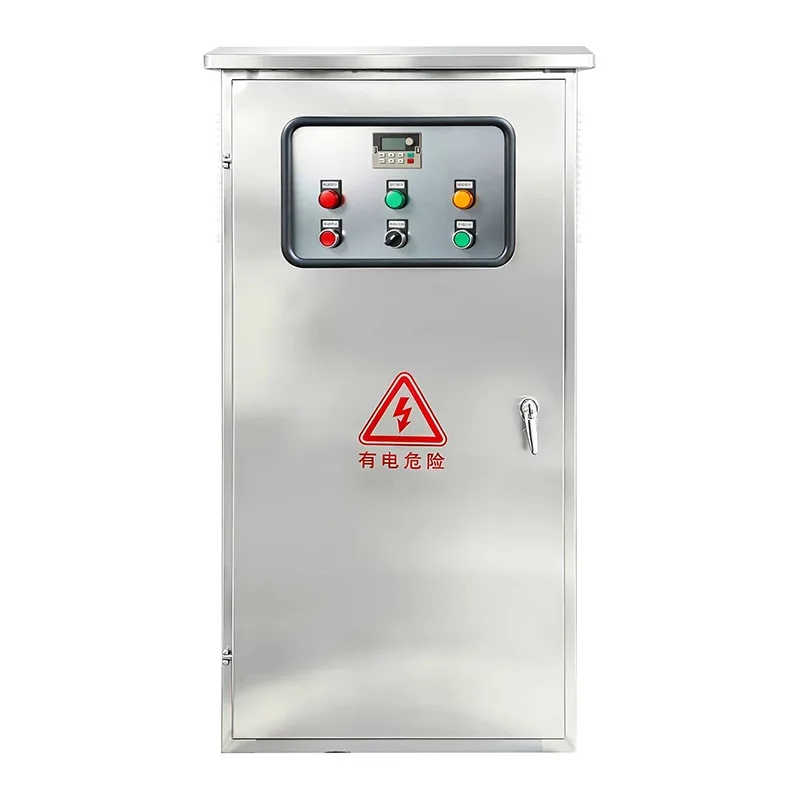
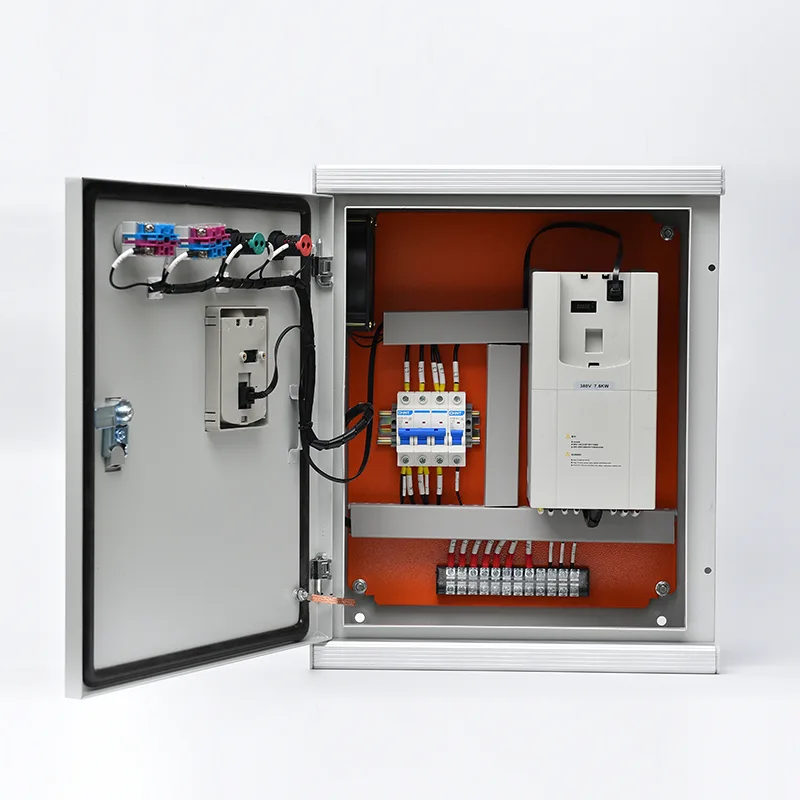
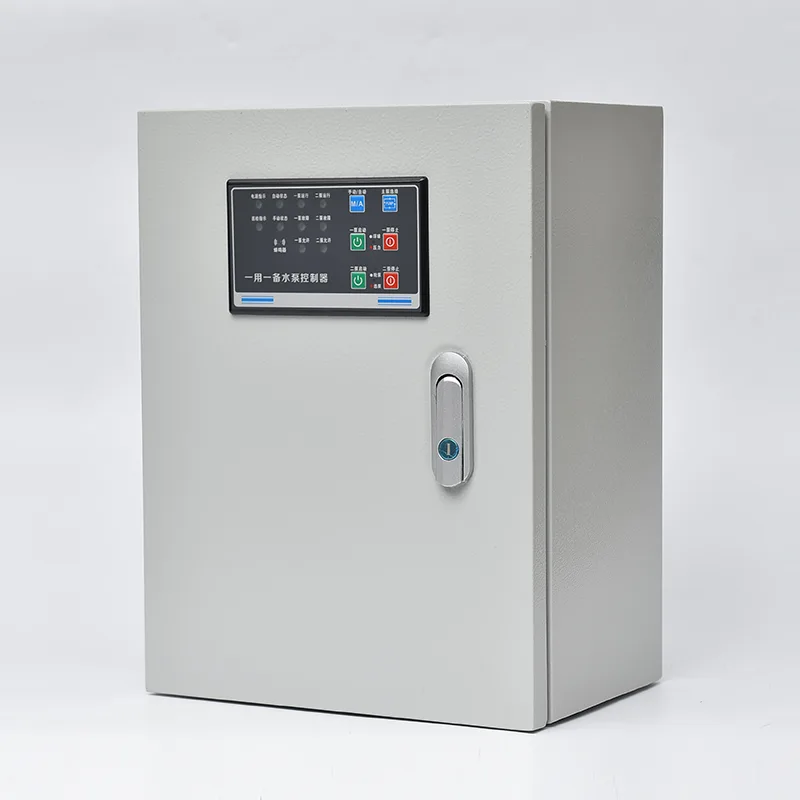
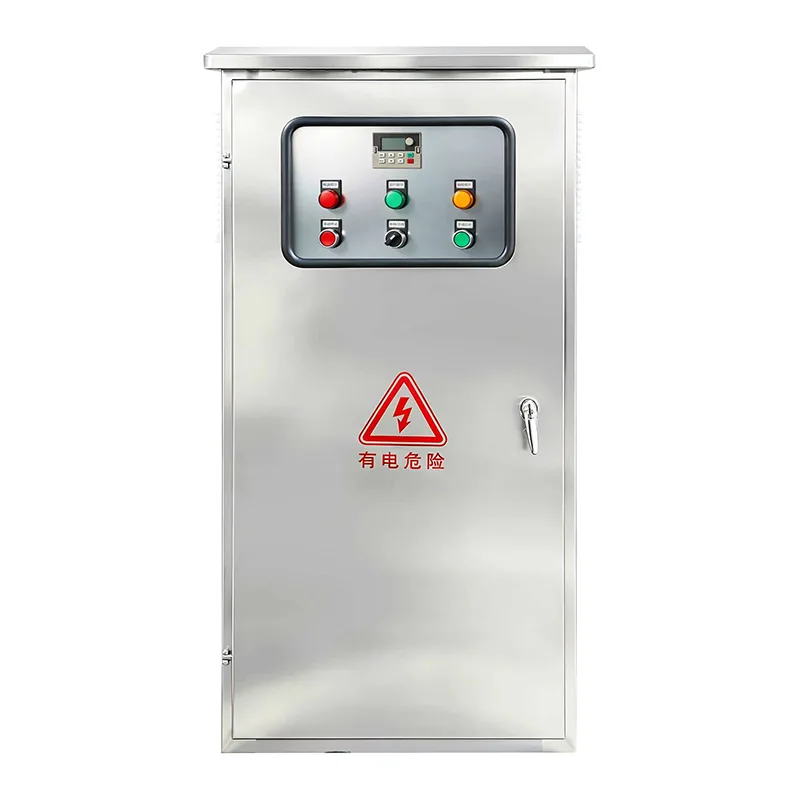
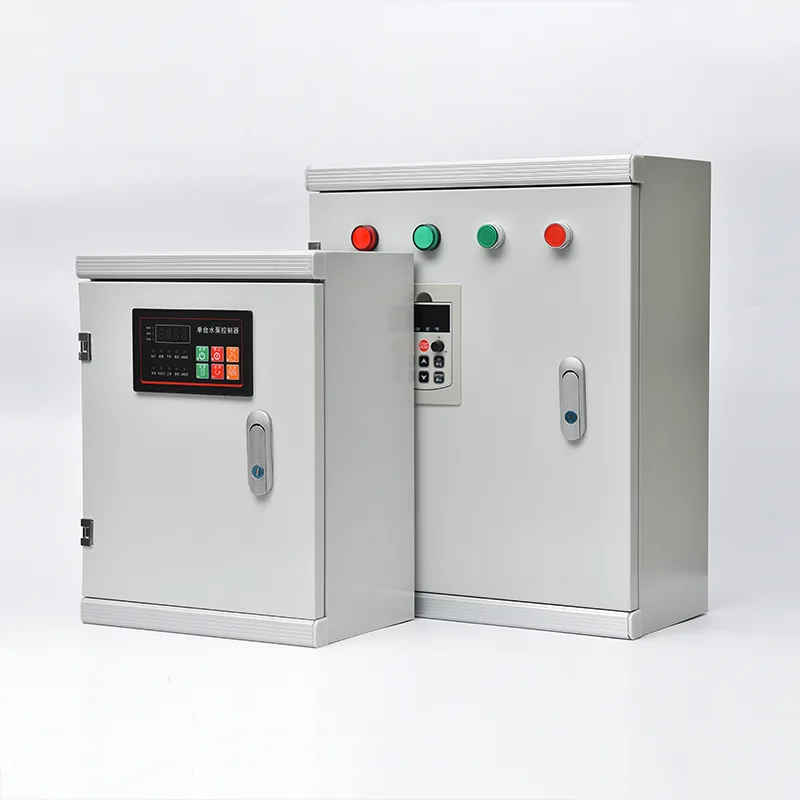
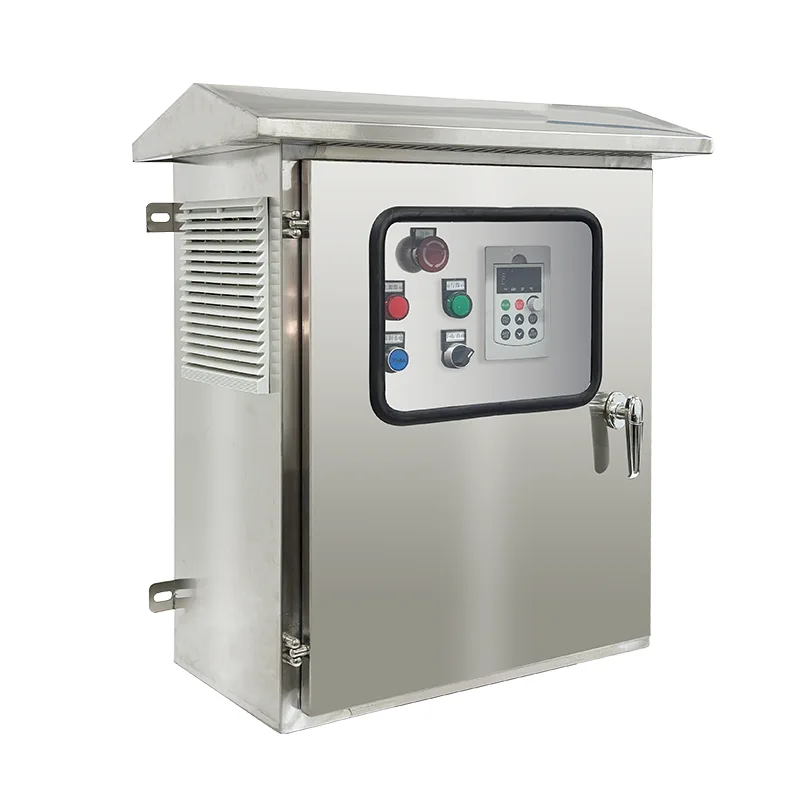
Housed in a purpose-built enclosure rated IP42 to IP65, this cabinet integrates a variable-frequency drive unit with all necessary power and control infrastructure: incoming mains isolation, line and load reactors for harmonic mitigation and motor cable protection, input fusing or circuit breaker protection, an output dV/dt filter or sine filter as required, and a full-featured motor protection suite. Power ratings span from 0.75kW to over 630kW across standard voltage classes (380V, 400V, 480V, 690V). The VFD itself is a high-performance vector-control drive delivering full torque at zero speed, with automatic energy optimisation and an integrated PID controller for pressure, flow, or temperature regulation. A door-mounted HMI keypad or touchscreen provides local control, parameter access, and diagnostic information, while Modbus RTU/TCP, Profibus, Profinet, or Ethernet/IP communication ports enable remote supervision and integration into plant-wide automation systems. A manual bypass option — using contactors or an integrated transfer switch — allows motor operation directly from the mains supply to maintain process continuity during drive servicing. Comprehensive protection functions cover short circuit, overload, overvoltage, undervoltage, phase loss, earth fault, motor stall, and overtemperature, with all trip events logged for maintenance analysis.
Wherever motor-driven equipment benefits from speed control, energy efficiency, and soft starting, the VFD Control Panel provides a complete, pre-engineered drive solution for industrial and infrastructure applications.
Municipal water supply and sewage treatment plants operate large pumps with variable demand throughout the day. A VFD Control Panel driving a borehole, booster, or transfer pump modulates motor speed to maintain constant water pressure or flow without throttling valves — typically achieving 20% to 40% energy savings compared to fixed-speed direct-on-line operation. Soft-start capability eliminates water hammer in long pipelines and reduces mechanical stress on pump impellers, shafts, and couplings. In wastewater applications, automatic ramping prevents surcharge overflows during wet-weather peak inflows. Redundancy-ready configurations allow duty/standby pump changeover.
Large centrifugal and axial fans in power stations, cement plants, mines, and manufacturing facilities are ideal VFD candidates. The cabinet enables precise airflow control for combustion air, exhaust, dust extraction, or process cooling without inlet vane or damper throttling losses. VFD control of induced-draught and forced-draught fans in boilers and furnaces delivers major energy savings while maintaining optimal air-to-fuel ratios. Smoke extraction and tunnel ventilation fans benefit from the cabinet's fireman's override feature, allowing direct-on-line emergency operation irrespective of VFD status.
Screw, reciprocating, and centrifugal compressors in industrial refrigeration, air separation, and process gas applications operate most efficiently at part load when speed-controlled. The VFD Control Panel adjusts compressor motor speed to match variable cooling or process demand, maintaining precise suction or discharge pressure while avoiding load/unload cycling energy losses. Integrated PID control with pressure transducer feedback provides tight regulation, and acceleration ramp control limits start-up current surge on the plant electrical system.
Mining conveyors, aggregate crushers, and bulk material handling systems demand high starting torque and controlled acceleration to prevent belt slippage, mechanical shock, and material spillage. The VFD Control Panel delivers full torque from zero speed with programmable acceleration ramps, protecting gearboxes, couplings, and belt splices. In crusher applications, the VFD's current limit function and stall protection safeguard the motor against jammed-material overload conditions.
Central plant HVAC systems with multiple chillers, cooling towers, and water circulation pumps use it to modulate flow based on building load. Secondary chilled water pumps responding to differential pressure, cooling tower fan speed control for optimal condenser water temperature, and condenser water pump modulation all benefit from cabinet-integrated VFD control with BMS connectivity via BACnet or Modbus.
Large-scale centre-pivot, drip, and flood irrigation systems require variable water delivery rates across the growing season. A VFD Panel at the pump station enables the operator to select flow rate via a simple potentiometer, HMI, or remote telemetry signal — matching pump output precisely to crop water demand and available water allocation.
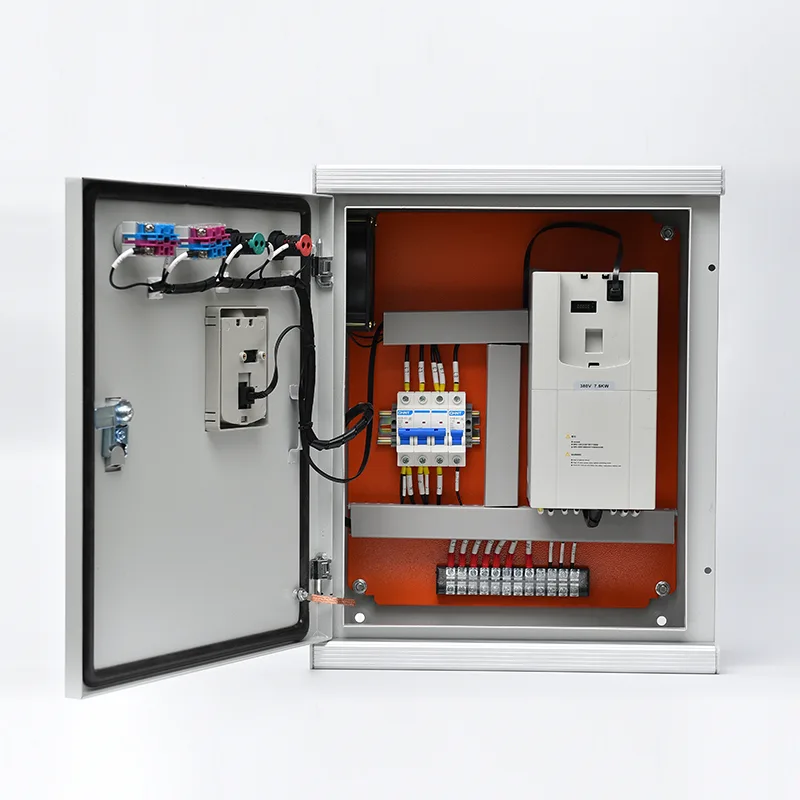
The VFD Cabinet integrates a variable-frequency drive with all power management, protection, and control subsystems — delivering a complete motor starting and speed-control solution in a single, pre-tested enclosure.
The incoming three-phase supply connects to a main isolator or moulded-case circuit breaker rated for the cabinet's full-load current plus drive losses. Input fusing provides semiconductor-rated (aR) protection for the VFD's rectifier stage, with I²t coordination ensuring fuse clearing before diode damage during internal faults. A line reactor or DC link choke is included as standard to reduce input harmonic current distortion and protect the drive's DC bus capacitors from supply-side voltage spikes. For installations with significant background harmonic distortion or demanding utility connection requirements, a passive harmonic filter or active front-end rectifier can be optioned.
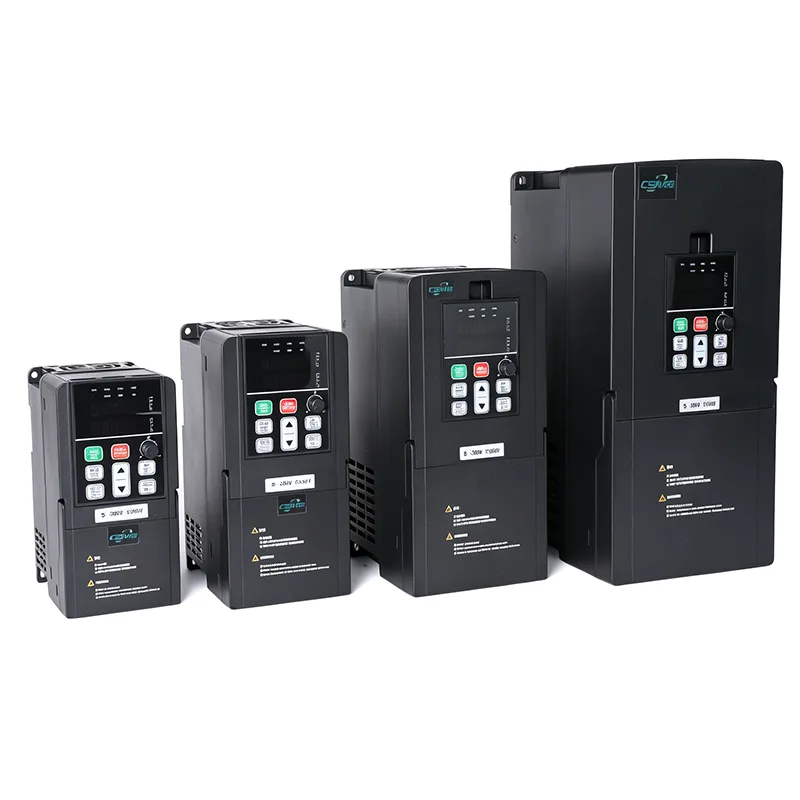
The heart of the cabinet is a high-performance vector-control VFD employing sixth-generation IGBT power modules and a high-speed DSP or FPGA control core. Open-loop and closed-loop vector control modes are available — open-loop for standard pump and fan duty, closed-loop with encoder feedback for high-torque, low-speed applications such as extruders or hoists. The drive outputs a pulse-width-modulated waveform with automatically optimised switching frequency, balanced between motor acoustic noise and drive losses. Key drive features include:
● Automatic torque boost and slip compensation for stable low-speed operation
● Flying-start capability to catch a coasting motor without tripping
● Programmable skip frequencies to avoid mechanical resonance
● Integrated PID controller with setpoint ramp, sleep/wake logic, and dual-channel feedback for pump staging applications
Depending on the cable distance between the cabinet and motor, output filtering is included:
dV/dt filter: limits voltage rise time and peak voltage at the motor terminals for cable runs up to approximately 100–150m
Sine filter: provides a near-sinusoidal waveform for cable runs exceeding 150m and for submersible pump applications where motor winding insulation is sensitive to voltage stress
Output contactors for duty/standby motor selection are integrated where required. Motor protection functions — thermal overload, phase loss, current unbalance, stall detection, underload (dry-run), and earth fault — run continuously in the drive's software and are supplemented by external overload relays when specified.
A manual bypass circuit — built with duty-rated contactors or a mechanically interlocked transfer switch — allows the motor to be run directly from the mains supply while the VFD is isolated for servicing. The bypass is designed for off-load transfer: motor must be stopped before switching between VFD and bypass modes. Integrated electrical and mechanical interlocking prevents inadvertent back-feeding of mains power into the drive output terminals, which would cause catastrophic damage. An optional automatic bypass configuration uses a programmable logic relay or small PLC to manage seamless drive-to-mains transfer on VFD trip, maintaining process continuity in critical applications.
For applications where multiple motors must share a single drive (sequential duty), the cabinet includes per-motor output contactors with PLC-based sequencing logic. For multi-motor applications requiring synchronised speed — such as twin conveyors or multi-fan air-cooled condensers — individual output inverters are driven from a common DC bus or synchronised via high-speed inter-drive communication, with master/slave speed and torque control.
The door-mounted operator interface provides local start/stop, speed reference (via potentiometer or keypad entry), mode selection (VFD/Bypass/Off), and system status indication. A graphical HMI touchscreen is available for complex multi-motor or process-loop applications, displaying real-time operating parameters, trend data, alarm logs, and energy consumption metrics.
Communication ports support all major industrial protocols: Modbus RTU (RS485), Modbus TCP, Profibus DP, Profinet, Ethernet/IP, and BACnet. The drive exposes a comprehensive data set — speed, current, torque, power, DC bus voltage, temperature, run hours, and energy consumption — to the supervisory SCADA, DCS, or BMS. Remote start/stop and speed reference commands are accepted, with heartbeat timeouts and configurable fallback strategies if communication is lost.
The floor-standing cabinet is fabricated from 1.5mm to 2.0mm galvanised or stainless steel sheet, continuously welded and powder-coated. Protection ratings from IP42 to IP65 suit site conditions:
● IP42/IP43: indoor electrical rooms and motor control centres
● IP54/IP55: dust-prone industrial environments, pump stations, and semi-exposed locations
● IP65: outdoor installation with rain and dust exposure
Thermal management uses a calculated combination of natural convection, filtered forced-air ventilation with temperature-controlled fans, and, in high-power or high-ambient installations, air-to-air heat exchangers or air conditioning units. The cabinet's internal temperature rise is verified by calculation against the VFD manufacturer's maximum operating temperature, typically 40°C to 50°C ambient depending on derating.
Every VFD Cabinet undergoes a defined factory acceptance test: power-circuit continuity and insulation resistance, VFD parameter upload and verification against the approved parameter schedule, control wiring point-to-point, functional simulation of start/stop, speed control, bypass transfer (where fitted), and safety interlock verification. Full FAT documentation is provided. The cabinet is designed and constructed to IEC 61439-1/2, with all components CE-marked and UL certification available where required.
Q1: What is the difference between buying a VFD and a VFD Control Panel?
A standalone VFD requires additional components for a complete installation: an upstream circuit breaker or fuses, line and load reactors, output filters for long cable runs, a bypass circuit if process continuity is needed during drive service, and an enclosure with thermal management. The VFD Control Panel integrates all of these — pre-engineered, pre-wired, and pre-tested — into a single assembly. This eliminates on-site design unknowns, reduces installation time, and provides a single point of warranty for the complete motor drive system.
Q2: What power ratings and voltages are available?
Standard configurations cover 0.75kW to 630kW across 380V, 400V, 480V, and 690V three-phase supplies. Higher power ratings are available on request. Each cabinet is built for the specific motor nameplate data you provide — power, voltage, full-load current, and duty.
Q3: How far can the motor cable run between the cabinet and the motor?
Cable length limits depend on the output filtering installed. Without filtering, the VFD manufacturer typically limits cable runs to 50m. A dV/dt filter extends this to approximately 150m. A sine filter allows cable runs beyond 300m and is strongly recommended for submersible pumps and motors with unknown or aged winding insulation. We will select the appropriate output filter based on your installation data.
Q4: Can the cabinet control multiple motors?
Yes, in several configurations: sequential duty (one VFD, multiple motors, only one runs at a time with output contactors selecting the active motor), synchronous multi-motor (multiple VFDs in one cabinet sharing a DC bus or communicating for master/slave speed matching), or independent control (multiple independent VFDs in one larger cabinet). Tell us your application and we will engineer the correct topology.
Q5: How does the VFD Control Panel integrate with my plant SCADA or DCS?
The VFD's communication port — Modbus RTU, Modbus TCP, Profibus, Profinet, Ethernet/IP, or BACnet — connects directly to your supervisory system. All operational data, alarms, and diagnostics are available. Two-way control (remote start/stop, speed reference) is supported, with configurable communication-loss behaviour to ensure safe operation if the network fails.
Q7: What maintenance does the cabinet require?
Routine maintenance is straightforward: semi-annual cleaning or replacement of ventilation filters, annual thermographic inspection of power terminations, and annual functional test of the bypass circuit and safety interlocks. The VFD itself has a specified service life for its DC link capacitors and cooling fans — typically 5 to 10 years depending on operating conditions — and these are replaceable components. Full maintenance schedules are documented in the operation manual.
Q8: Can the cabinet operate in a dusty or high-temperature environment?
Yes. The enclosure protection rating and thermal management strategy are selected based on your site conditions. For dusty environments, IP55 or IP65 with fine-filtration intake filters is specified. For ambient temperatures above 40°C, VFD derating, cabinet air conditioning, or air-to-water heat exchangers ensure safe internal conditions. We will assess your site data during the engineering phase and propose the appropriate environmental hardening.
A Regional Water Utility — Pump Station Modernisation Programme
A regional water utility in South America operated over 60 borehole and booster pump stations across its distribution network, serving a population of approximately two million. Many pump stations were decades old, using fixed-speed direct-on-line starters with throttling valves for flow control. The utility faced rising energy costs, frequent pump and pipework failures from water hammer and mechanical stress, and increasing difficulty sourcing replacement parts for obsolete control hardware.
The utility elected to modernise its pump stations with VFD control in a phased programme, targeting the 20 largest stations first. Each station presented a similar profile: two to four duty/standby pump sets (45kW to 200kW), long motor cable runs (often exceeding 150m to submersible borehole pumps), dusty semi-outdoor environments in remote locations, and limited on-site electrical support for complex system maintenance.
● The VFD solution had to accommodate long cable runs to submersible pumps without degrading motor winding insulation
● A manual bypass was mandatory to maintain water supply during VFD servicing, as many stations did not have standby pump redundancy
● Remote monitoring capability was essential to reduce costly site visits
● The electrical installation had to be completed by local contractors with minimal VFD commissioning experience
After evaluating both component-sourced VFD retrofits and integrated VFD Control Panels, the utility selected the cabinet approach. The benefits were clear:
● Every cabinet was factory-engineered with output sine filters matched to the specific cable length and motor insulation type, eliminating any risk of motor winding damage from reflected wave voltage spikes
● The integrated manual bypass circuit, pre-wired and tested, gave the utility confidence that water supply would continue during any VFD service event
● The door-mounted HMI and fully parameterised VFD were factory-loaded with the pump curve data, PID pressure control settings, and the utility's standard protection thresholds — enabling local contractors to commission each cabinet by simply connecting the mains supply, pump motor, and pressure transducer
● GPRS/4G remote monitoring modules in each cabinet transmitted operational data — flow, pressure, energy consumption, run hours, alarm status — directly to the utility's central SCADA platform
The IP55-rated enclosures with fine-filtration intakes and sunshade canopies suited the dusty, exposed pump station environments
Twenty VFD Cabinets (45kW to 200kW) were manufactured, each with an output sine filter, manual bypass, IP55 enclosure, GPRS remote telemetry, and pre-configured PID pressure control. The cabinets were shipped as complete, factory-tested units. Local electrical contractors installed and commissioned the cabinets in sequence over a 10-month programme. Remote commissioning support was provided by the manufacturer's engineers via video link for the first three stations; subsequent stations were commissioned independently by the local teams using the standardised documentation.
Energy consumption across the 20 modernised stations reduced by an average of 32% compared to the previous throttling-valve operation, with the VFDs matching pump speed precisely to system demand.
Pump and pipework maintenance costs dropped significantly: water hammer events were eliminated, and pump bearing and seal life were extended through soft-start ramping.
Not a single motor insulation failure occurred across 20 stations with cable runs up to 250m, validating the sine filter specification.
The utility's central operations team now monitors all 20 stations from a single SCADA dashboard, receiving automated SMS alarms for any pump trip or pressure deviation — reducing reactive site visits by over 60%.
The success of the first phase has led the utility to extend the programme to the remaining 40 pump stations, standardising on the same VFD Cabinet specification and enabling uniform maintenance training and spare parts inventory across the entire network.
Address
No. 3788, Liujiang Road, Liushi Town, Yueqing City, Wenzhou City, Zhejiang Province, China
Tel
If you have any enquiry about quotation or cooperation, please feel free to email us at sanchia@csivei.com or use the following inquiry form.Our sales representative will contact you within 24 hours. Thank you for your interest in our products.
WhatsApp:8615705777705