Whatsapp
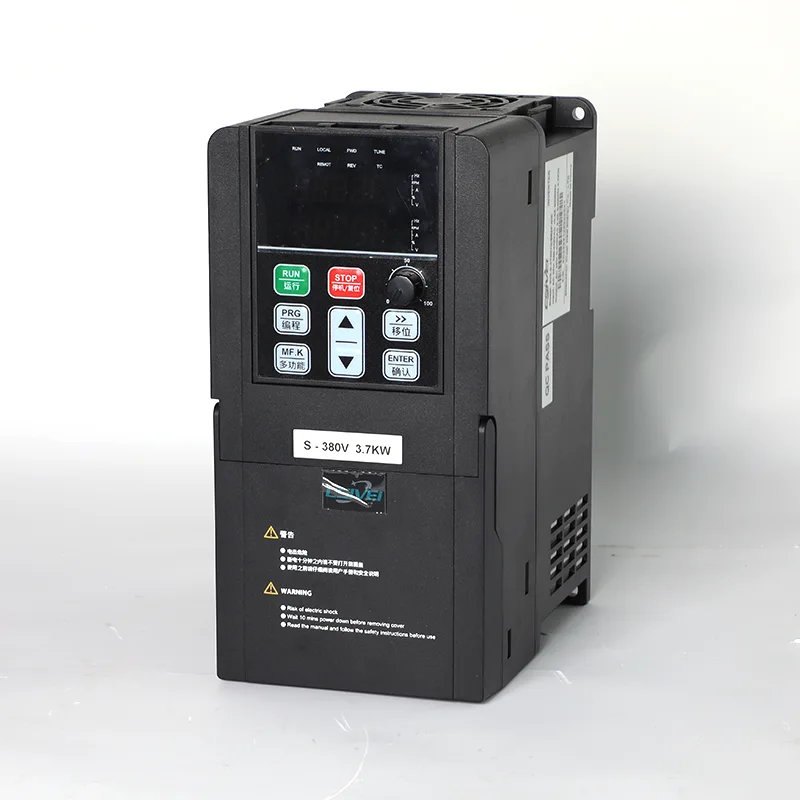
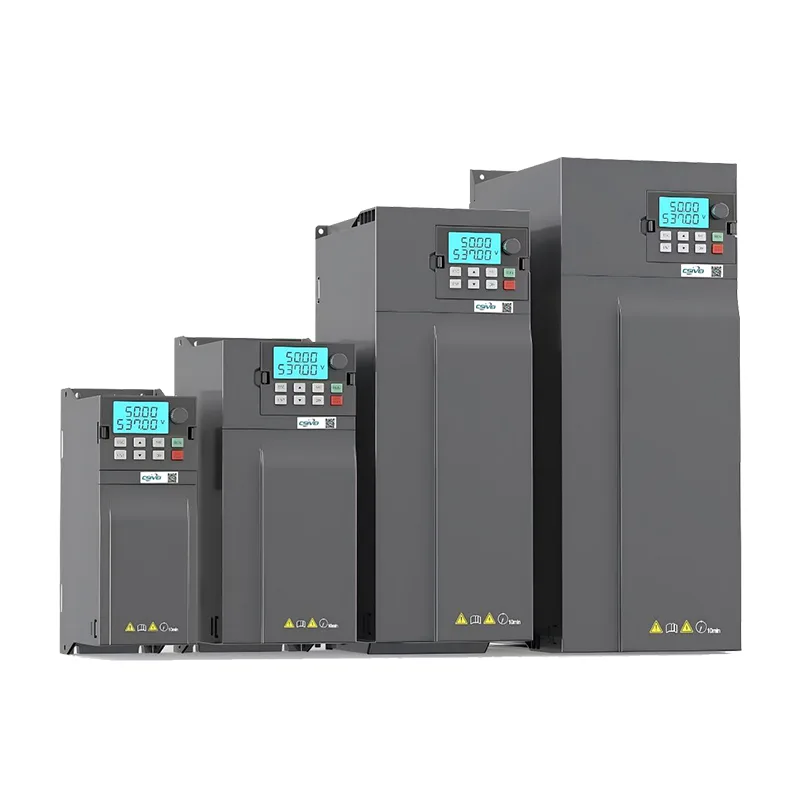
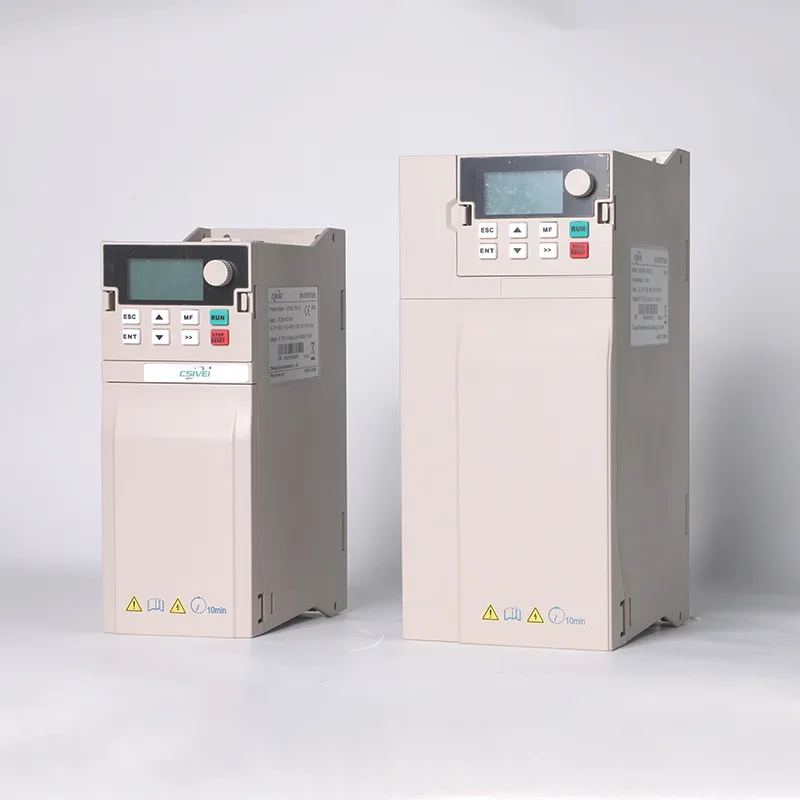
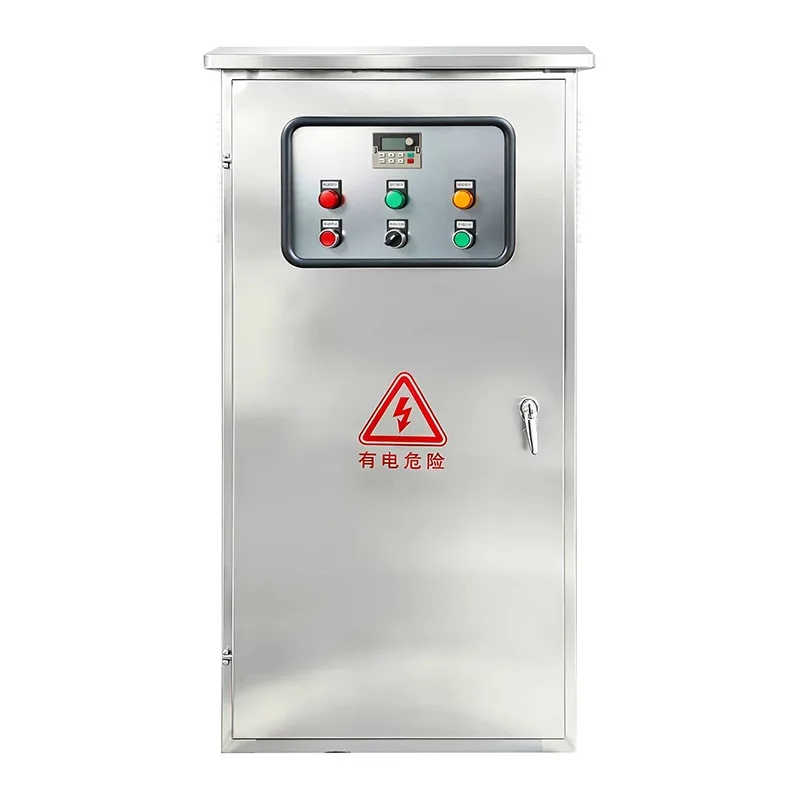
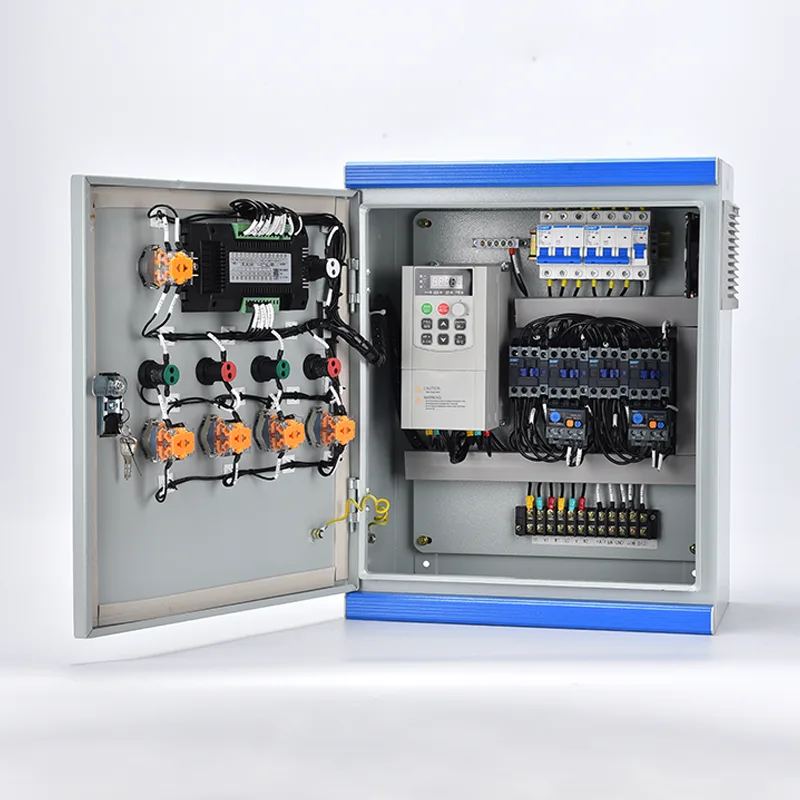
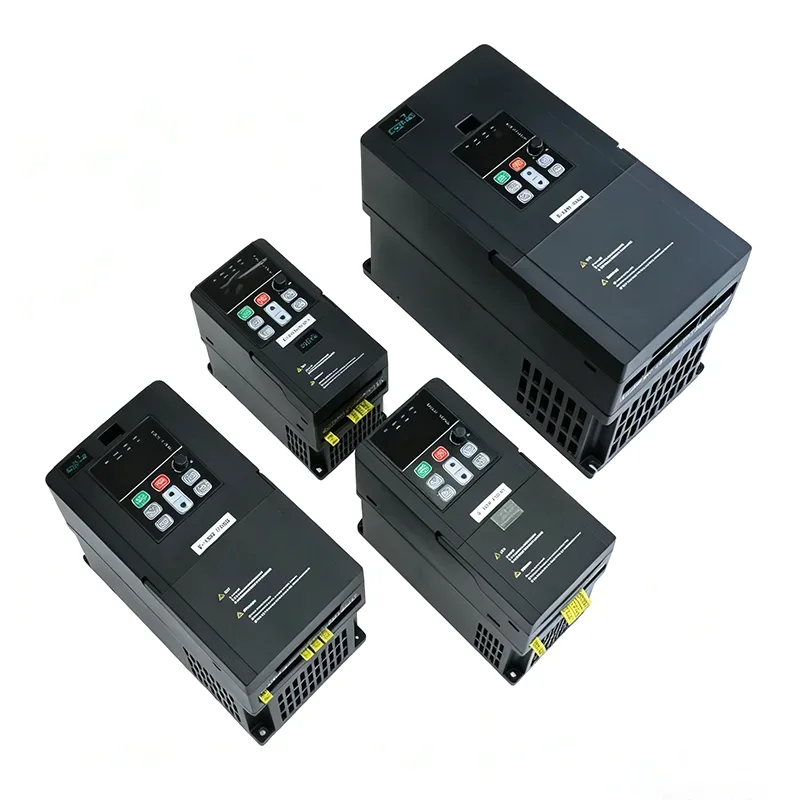
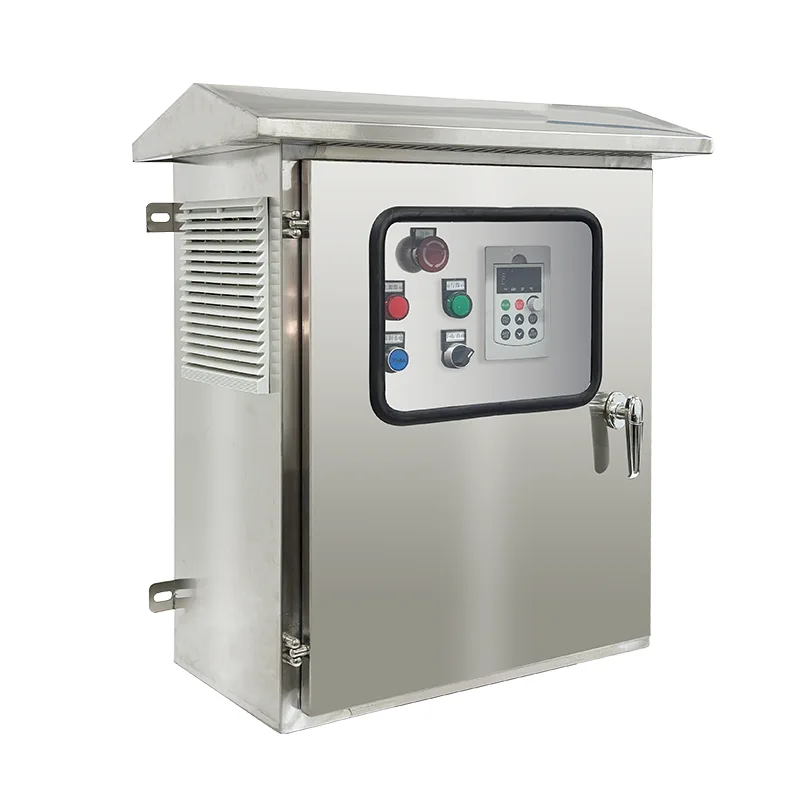
The Soft Starter Cabinet offered by leading China manufacturer Csivei includes a 3-phase soft starter unit (rated from 7.5 to 800 kW, 380–690 V), an incoming circuit breaker or fused disconnect, a built-in bypass contactor, a motor overload relay, and a control transformer. Starting characteristics — programmable current limit, voltage ramp time, and initial torque — are set via a digital keypad or HMI. Optional functions include a soft-stop ramp for pump systems to prevent water hammer. Protection covers short circuit, overload, phase loss, under/overvoltage, and thyristor overtemperature. Standard communication via Modbus RTU allows connection to plant DCS or SCADA; optional Profibus, Profinet, or Ethernet/IP are available. The floor-standing enclosure is fabricated from galvanised steel with a powder-coated finish, rated IP42 to IP55, suitable for indoor electrical rooms and dusty industrial environments.
For motors that operate at fixed speed but require gentle starting to protect driven equipment and electrical networks, the Soft Starter Cabinet provides a compact, low-maintenance alternative to direct-on-line or star-delta starters.
Raw water intake, booster, and transfer pumps benefit from soft starting, which eliminates water hammer in pipelines and reduces mechanical wear on pump impellers and couplings. The built-in soft-stop function further dampens check valve slam and pressure surges. Bypass operation during steady-state running ensures minimal cabinet heat generation, even in pump stations with limited ventilation.
Chillers, cooling tower fans, and large air-handling unit motors in commercial buildings can draw high start-up currents that cause lights to flicker and strain generator controls. Soft starter cabinets limit inrush current to 3–4 times full-load, preventing voltage dips. Bypass contactors eliminate continuous thyristor losses, maintaining system energy efficiency during the building’s long operating hours.
Belt conveyors and rock crushers require gentle torque application during start-up to protect gearboxes, belt splices, and couplings from shock loading. The soft starter’s adjustable kick-start feature delivers a brief high-torque pulse before ramping, overcoming the breakaway friction of a fully loaded belt. Once the motor is running, the bypass contactor ensures cool, energy-efficient operation in dusty, high-temperature environments.
Screw and reciprocating compressors in manufacturing plants, along with mixers and agitators in chemical processing, start under load and need smooth acceleration. Soft starters eliminate the abrupt torque transients that accelerate bearing and vane wear, while bypass operation ensures no thyristor losses during long continuous runs.
Deep-well submersible pumps and large sprinkler systems in remote areas rely on soft starters to protect pump shafts and well casings from starting torque. The cabinets are compatible with generator supplies, as the reduced inrush current allows a smaller generator to start a larger pump. Bypass operation reduces fuel consumption during irrigation season.
The Soft Starter Cabinet integrates a thyristor-based soft starter with full motor and circuit protection in a single pre-wired enclosure, optimised for industrial fixed-speed motor control.
The soft starter controls six anti-parallel silicon-controlled rectifiers (SCRs), one pair per phase, to smoothly increase motor voltage from an adjustable initial torque level (typically 30–60% of nominal) to full voltage over a user-set ramp time (0.5–60 seconds). During ramp-up, current is limited to a defined multiple of full-load current, typically 3–5x, preventing transformer or generator overload. Once the motor approaches synchronous speed, an internal algorithm detects the drop in current and signals a bypass contactor to close, directly connecting the motor to mains. This shunts current out of the SCRs, eliminating their conduction losses and heat generation.
After starting, all motor current flows through the mechanical bypass contactor, which is rated for continuous duty. The SCRs remain gated off, so the soft starter contributes nothing to thermal rise. This is a key advantage over VFDs in fixed-speed applications — the cabinet runs cool and requires minimal ventilation. If a soft stop is selected, the bypass opens at shutdown, and the SCRs re-engage to ramp voltage down gradually, preventing water hammer.
The cabinet provides full motor protection through a thermal-magnetic circuit breaker and an electronic overload relay with phase-loss and current-unbalance detection. Short-circuit protection is co-ordinated to preserve SCR integrity. Additional protections include:
● Under/overvoltage protection, shutting down before motor damage from voltage anomalies
● Thyristor overtemperature sensing, with an alarm and trip stage
● Phase reversal and phase loss detection
● Stall and locked-rotor protection via the relay
External safety interlocks (e.g., emergency stop, vibration switch) are wired to the control circuit through dedicated terminals.
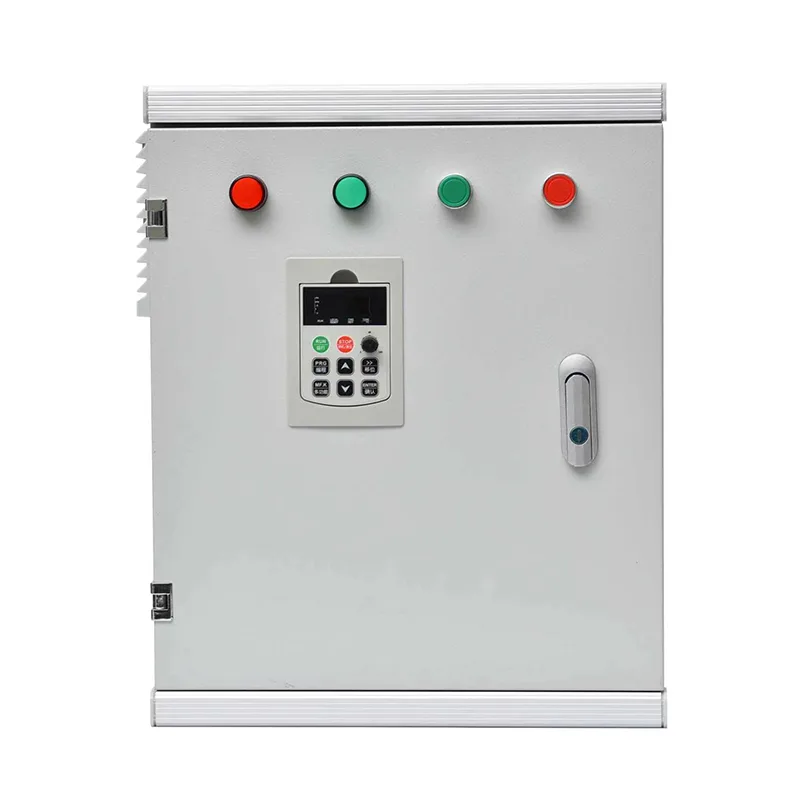
A digital keypad with an LCD display on the starter unit provides local parameter setting, start/stop control, and status indication — including motor current, voltage, and fault codes. A door-mounted HMI can be integrated for larger cabinets. Standard RS485 Modbus RTU allows remote start/stop, parameter download, and alarm reporting to a DCS or SCADA. For demanding plant networks, Profibus DP, Profinet, or Ethernet/IP gateways are available.
The floor-standing cabinet is constructed from heavy-gauge galvanised steel sheet with a weatherproof powder coat finish. Since thyristor heat is generated only during the seconds-long start and stop ramps, natural convection cooling is often sufficient for indoor cabinets. For high-power units or high-ambient environments, filtered forced-air fans with thermostatic control are provided. The standard protection rating is IP42 to IP54; higher ratings are available for dusty or outdoor locations.
Each cabinet undergoes a factory acceptance test including: power circuit insulation resistance measurement, SCR firing circuit verification, bypass contactor operation, and functional testing of all programmed start/stop profiles and protection functions. The assembly is designed and tested to IEC 61439-1/2, and all control circuits are tested to applicable noise immunity standards.
Q1: When should I choose a soft starter cabinet over a VFD or DOL starter?
Choose a soft starter when you need smooth motor acceleration and reduced inrush current but do not require continuous speed variation. Soft starters are simpler, generate less heat, cost less, and are more compact than VFDs. Compared to DOL, they eliminate current surges and mechanical shock. Compared to star-delta, they provide fully adjustable starting parameters and can soft-stop pump systems.
Q2: What motor sizes can the cabinet accommodate?
Standard cabinets are configured for motors from 7.5 kW to 800 kW at 400 V (three-phase), with 690 V ratings available for larger motors. We will match the soft starter, bypass contactor, and circuit breaker to your motor nameplate current. Custom configurations for higher powers are possible.
Q3: Does the soft starter cabinet support multi-motor starting?
Yes, in a sequential arrangement: a single soft starter can start several motors one after another, each with its own output contactor. After the first motor reaches full speed and bypasses, the soft starter disconnects from it and connects to the second motor, and so on. This reduces cost when several pumps or fans of similar size share a station. However, all motors must have the same or similar starting parameters.
Q4: What happens if the soft starter fails while the motor is running?
Once the motor is at full speed and the bypass contactor is closed, the motor runs directly from the mains supply. If the soft starter's control board fails or SCRs are damaged, the motor continues to run unaffected. The fault will only affect the next start attempt. This inherent fail-safe is a major operational advantage.
Q5: How long is the soft-start ramp, and can it be adjusted?
The voltage ramp time is fully adjustable, typically from 0.5 to 60 seconds, and can be extended further if needed. The initial starting voltage (kick start) is also adjustable. The optimal ramp is determined by the motor and load — long enough to eliminate mechanical shock, short enough to limit thyristor heating during the start.
Q6: Can the soft starter handle frequent starts?
A soft starter is rated for a specific number of starts per hour (typically up to 10 heavy-duty starts). This rating depends on the start current setting, ramp time, and motor size. For applications involving very frequent starts (e.g., indexing conveyors), a VFD may be more appropriate. Consult us with your duty cycle for proper sizing.
Q7: What maintenance does the cabinet require?
Regular maintenance is minimal: annual visual check of power terminations, cleaning of ventilation filters (if fitted), and functional check of the bypass contactor. SCRs have no moving parts and do not wear. The bypass contactor is the main serviceable component, with a mechanical life typically exceeding one million operations, which translates to years of service.
Q8: Does the soft starter create harmonics on the mains supply?
Thyristor soft starters generate harmonic currents only during the brief start and soft-stop ramps. During steady-state bypass operation, the motor draws sinusoidal current, so no harmonics are produced. This makes them more grid-friendly than AC drives, which can generate continuous harmonics unless filtered.
A regional water authority in Eastern Europe managed a network of 20 remote booster pump stations, each with 2–4 conventional direct-on-line (DOL) started pumps ranging from 37 to 132 kW. The stations were critical for distributing water to several towns, but recurring problems were causing unacceptable operational costs and service disruptions.
The primary problem was electrical. The sudden DOL starting current — up to 7 times full-load — caused severe voltage dips on the weak rural distribution lines. This tripped protection relays at nearby substations, occasionally interrupting power to the pump station itself. The authority also faced high mechanical maintenance costs: water hammer during pump start and stop frequently ruptured pipe joints and damaged check valves, while the abrupt torque application shortened pump bearing and coupling life. The stations were unmanned and located in remote areas, so any equipment had to be robust, simple, and capable of remote fault reporting.
The authority evaluated both VFDs and soft starters. VFDs offered speed control but were deemed excessive — the pumps were designed to run at fixed speed against a static system curve, where throttling valves already provided flow trimming. Soft starter cabinets offered the ideal match: they would eliminate starting current surges and water hammer without introducing continuous drive losses or complex cooling.
● The soft starter’s internal bypass contactor meant that once running, the motor would draw power with no thyristor losses, keeping cabinet heat generation minimal in unventilated pump rooms.
● The soft-stop feature would gradually ramp down the pump during shutdown, removing the pressure shock that caused water hammer.
● The cabinets’ simple digital interface and RS485 Modbus connection integrated directly into the authority’s emerging SCADA network, allowing fault reporting without site visits.
● The reduced inrush current meant existing generator sets (used during grid outages) could start the same pumps without problematic voltage drop, extending effective backup capacity.
Twenty standardized soft starter cabinets (45 to 160 A rating) were fabricated, factory-tested, and installed in existing pump rooms over six months. Each cabinet included a main circuit breaker, a soft starter with bypass contactor, an electronic overload relay, Modbus communication, and a rain-proof IP54 enclosure. Commissioning involved simple parameter entry for ramp time and current limit, and connection of a single Modbus cable to the station’s remote terminal unit.
● Grid voltage disturbances from pump starting were eliminated. No further substation trips have been recorded since the retrofit.
● Pipe repairs reduced by over 80% in the first year, as water hammer during start and stop was eliminated through soft-start and soft-stop profiling.
● Pump bearing and seal replacements showed a measurable decline, attributed to the smooth, low-torque starting.
● The bypass design ensured the power rooms remained cool, even during extended high-demand pump runs; no cabinet cooling failures occurred.
● The authority now receives real-time start/stop status, start current, and fault logs from each station on its SCADA, enabling predictive response instead of emergency call-outs.
● After one year, the authority expanded the program to ten additional stations, adopting the soft starter cabinet as its standard for all DOL-to-soft retrofit projects.
Address
No. 3788, Liujiang Road, Liushi Town, Yueqing City, Wenzhou City, Zhejiang Province, China
Tel
If you have any enquiry about quotation or cooperation, please feel free to email us at sanchia@csivei.com or use the following inquiry form.Our sales representative will contact you within 24 hours. Thank you for your interest in our products.
WhatsApp:8615705777705